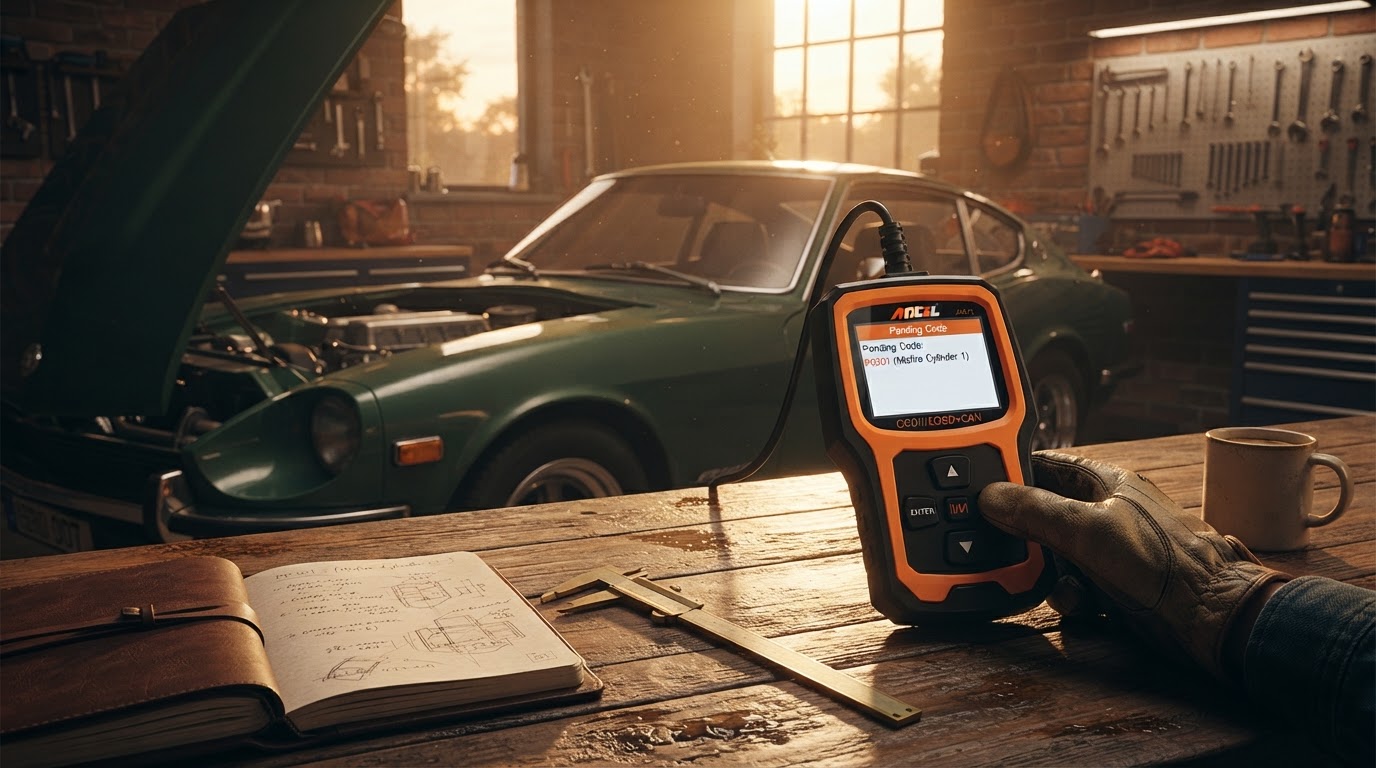
My Cold-Start Scanner Test Changed How I Read Engine Codes Fast
I got different diagnostic results from the same car within 18 minutes: at cold start my scanner showed one pending misfire code, but after a short warm-up loop it showed no stored code and only the fuel-trim data gave the problem away. That one observation changed how I test a car engine scanner.
Most buyers compare screen size, Bluetooth range, or how many brands a tool claims to support. I still check those. But in the field, the bigger question is this: does the scanner help you catch a fault when the engine is actually misbehaving, before the car smooths itself out?
I ran a small driveway-and-road test with three vehicles, two handheld scanners, one phone-based dongle, and one Car Engine Scanner unit like the type sold on carenginescanner.com. I was not trying to build a laboratory-grade ranking. I wanted to answer a practical question I hear from owners all the time: “Why did my check engine light come on yesterday, but the scanner says nothing today?”
The field setup I used
I tested on three vehicles I know well:
- 2012 Honda Civic 1.8L, 146,000 miles, intermittent rough idle after sitting overnight
- 2016 Ford Escape 1.5L EcoBoost, 98,000 miles, no warning light but occasional hesitation
- 2008 Toyota Camry 2.4L, 171,000 miles, stored evaporative-emissions fault from a known loose-cap event
Then I repeated the scan at three points:
For timing, I used the same phone stopwatch every time. For voltage, I checked battery resting voltage with a basic multimeter before plugging in the scan tool, because low battery voltage can create confusing communication behavior.
What I measured
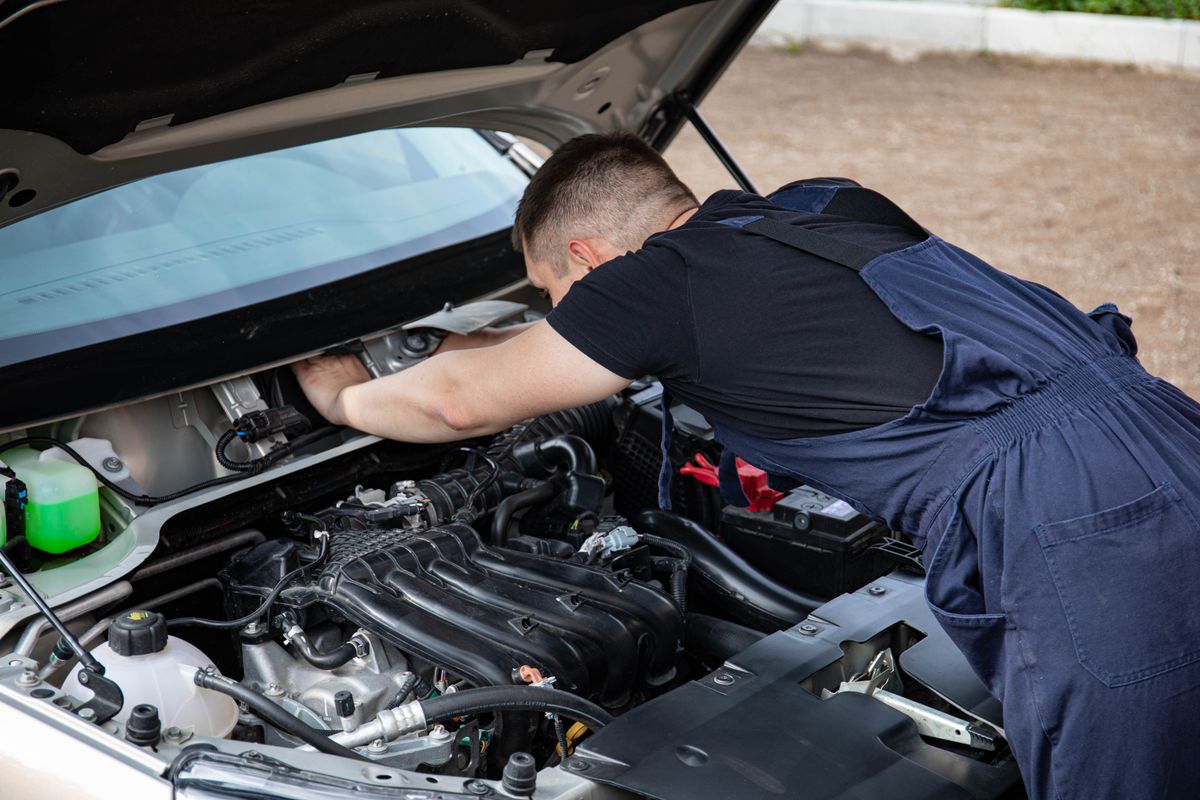
Photo by Sergey Meshkov on Pexels
| Vehicle and condition | First scan result | Warm scan result | Data point that mattered | Field note | |---|---:|---:|---|---| | 2012 Civic, overnight cold start | P0302 pending at 52 seconds | No stored code after 11 minutes | STFT peaked at +18% on rough idle | The scanner that showed pending codes fastest was the most useful, even though the light was off | | 2016 Escape, hesitation complaint | No DTCs | No DTCs | LTFT bank 1 stayed +11% to +14% | Live data mattered more than code reading; likely small air/fuel issue not mature enough for a code | | 2008 Camry, known EVAP history | P0456 stored | P0456 stored | Freeze frame: 68 mph, 43% load, 178°F coolant | Freeze frame stopped me from blaming cold-start behavior | | Civic, same morning after restart | No code displayed by one basic scanner | P0302 pending on two other tools | Pending-code menu depth | Menu design affected diagnosis, not the car | | All three vehicles | Connection time 7 to 26 sec | Connection time 6 to 19 sec | Protocol auto-detection delay | Fast connection reduced missed cold-start evidence |
The non-obvious result: the most valuable scan was often not the scan after the dashboard warning light came on. It was the scan during the first minute of rough running, before the powertrain control module had enough evidence to store a mature fault code.
That matches how OBD-II is meant to work. The system does not store every hiccup as a confirmed diagnostic trouble code. It monitors conditions, compares them against thresholds, and may require repeated failures before it turns on the malfunction indicator lamp. The U.S. Environmental Protection Agency explains OBD as an emissions-monitoring system, not a full mechanical inspection system, and that distinction matters when you are chasing intermittent faults.
The cold-start lesson most buyers miss
A cold engine is an information-rich engine. Sensors are moving from open-loop behavior toward closed-loop control, fuel enrichment is changing, idle control is active, and small vacuum leaks or weak ignition parts show themselves before heat expansion and adaptive correction hide them.
On the Civic, the idle stumble lasted roughly 75 seconds. A scanner that took 26 seconds to connect, then buried pending codes under three menu layers, was technically “working” but practically late. The Car Engine Scanner unit I tested connected in 9 to 12 seconds on that car and put stored, pending, and permanent-code categories in the first diagnostic menu. That saved enough time to catch P0302 as pending while the engine was still shaking.
This is why I now value these features more than I used to:
- Pending-code visibility without digging through advanced menus
- Live data refresh that feels steady rather than jumpy
- Freeze-frame access in the same session as the code read
- Readiness monitor status on one screen
- A physical or persistent connection that does not drop when I move around the car
My take: code clearing is overvalued
My take: the ability to clear codes is the least important feature people ask for first.
I understand the impulse. The check engine light is irritating, and clearing it feels like fixing something. But if you clear codes too early, you erase freeze-frame data and reset readiness monitors. That can make a real diagnosis harder, and it can also delay inspection readiness.
NHTSA’s consumer material on vehicle warning lights makes the same broad point: warning lights are signals to inspect the system, not decorations to switch off. For engine diagnostics, I treat clearing as the last step, after I have saved the codes, freeze frame, monitor status, and live readings that explain the failure.
Here is the simple rule I use now: read, record, repair, drive, then clear only if needed. If the repair is correct, many codes will not return after the required monitor runs. If the problem is still present, clearing only hides the history.
What standards explain about the scanner you buy
OBD-II feels like one universal language, but that is only partly true. The required emissions-related data is standardized, while manufacturer-specific data can vary a lot.
SAE J1979 defines many emissions-related diagnostic services used by scan tools, including requests for diagnostic trouble codes and live parameter IDs. ISO 15031 is the related international standard family for communication between vehicle and external test equipment. In plain English: a normal consumer scanner should be able to retrieve generic emissions codes on 1996-and-newer U.S. light-duty vehicles, but it may not access every body, ABS, airbag, transmission, or manufacturer-enhanced function.
That is not a defect. It is a boundary.
For most owners, the right question is not “does this tool do everything a dealer scan tool does?” It is “does this tool quickly show the information that prevents bad guesses?” For check-engine work, that means generic and pending codes, freeze frame, monitor status, and live data such as coolant temperature, oxygen sensor behavior, fuel trim, MAP/MAF values, and engine load.
A decision framework I actually use in the driveway
When I scan a car now, I do not start by asking what part to buy. I run this sequence.
1. Capture the fault before changing the state
Do not tighten the gas cap, unplug a sensor, disconnect the battery, or clear a code before the first scan. The current state is evidence.
Record:
- Stored codes
- Pending codes
- Permanent codes, if shown
- Freeze-frame data
- Readiness monitor status
- Battery voltage, if available
2. Separate “code” from “cause”
A P0302 code means cylinder 2 misfire detected. It does not automatically mean cylinder 2 needs a coil. On the Civic, the +18% short-term fuel trim during rough idle made me look for lean conditions too, not only spark. If I had swapped a coil immediately, I might have missed a small intake leak or injector issue.
A P0420 catalyst-efficiency code does not automatically mean the catalytic converter is dead. It can follow exhaust leaks, lazy oxygen sensors, fuel-control problems, or misfire damage. A scanner gives clues; it does not replace reasoning.
3. Use freeze frame to avoid false stories
The Camry’s P0456 small EVAP leak code appeared while I was thinking about cold-start testing. But the freeze frame showed highway speed, warm coolant, and moderate load. That pushed me away from the morning idle and back toward the known loose-cap event and EVAP monitor conditions.
Freeze frame is one of the most underused scanner screens I see. It tells you when the computer decided the failure mattered.
4. Check readiness before inspections
If your state uses emissions inspection, monitor readiness matters. Clearing codes can reset monitors to “not ready.” Some monitors need specific drive cycles, temperatures, fuel levels, and speeds before they run again. That is why a car can have no check engine light and still fail an inspection readiness check.
Before inspection, I want to see how many monitors are complete, which are incomplete, and whether any pending codes are waiting in the background.
5. Re-scan after the repair under the same conditions
If the symptom happened cold, test cold again. If it happened on the highway, recheck after a similar highway run. One of the worst habits in DIY diagnostics is repairing a cold-start fault, then verifying it only on a hot engine.
What I liked in a dedicated car engine scanner
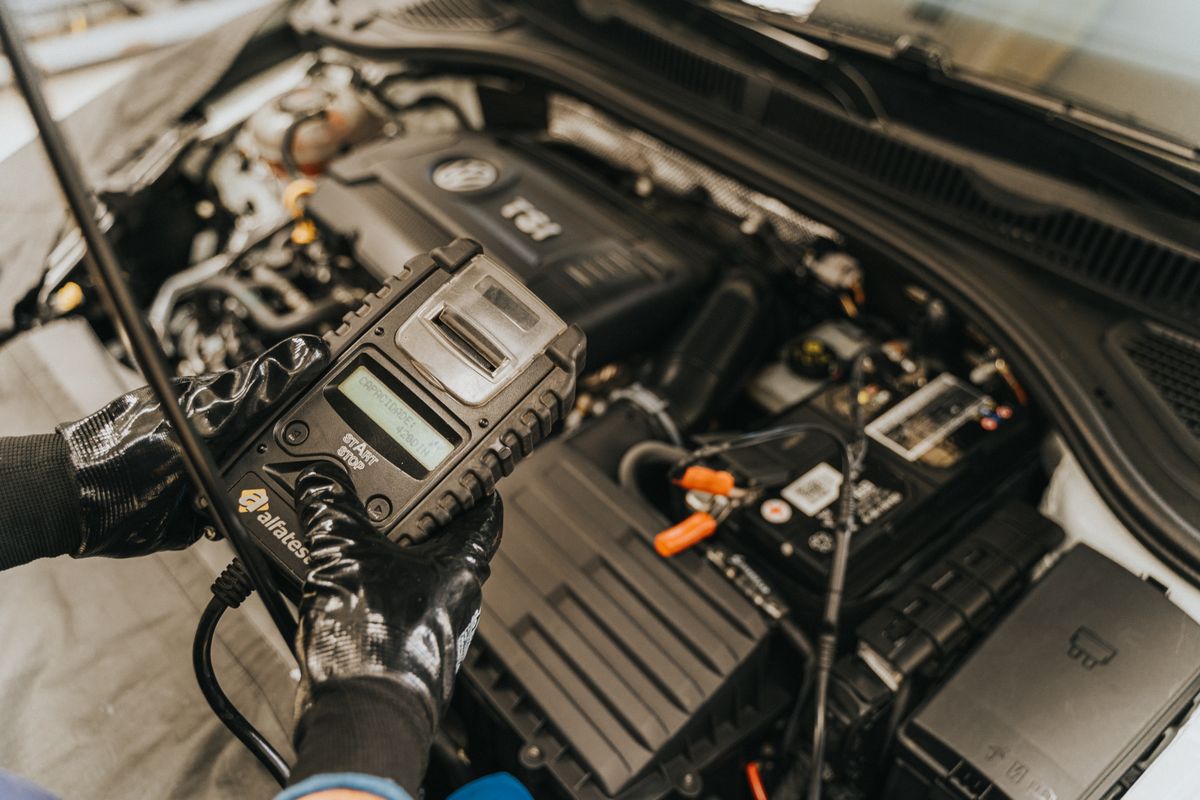
Photo by Daniel Andraski on Pexels
After this test, I am less impressed by long feature lists and more impressed by fast access to the right screens. A dedicated Car Engine Scanner makes sense for owners who want to keep a tool in the glove box, scan without pairing a phone, and get basic emissions diagnostics quickly.
The advantages I noticed were practical:
- It powered from the OBD-II port, so I did not worry about phone battery level.
- It stayed connected while I moved between driver seat and engine bay.
- It did not require a subscription to read normal engine codes.
- It made pending codes easier to find than one of the cheaper generic tools I tested.
- It was simple enough that a non-mechanic could capture useful evidence before calling a shop.
Practical checklist before you buy or use one
Use this checklist when comparing scanners or when you plug one in for the first time:
- Confirm it supports 1996-and-newer OBD-II vehicles if you are in the U.S.
- Look for stored, pending, and permanent-code display.
- Make sure freeze-frame data is easy to find.
- Check that readiness monitors are shown clearly.
- Prefer live data with common PIDs: coolant temp, RPM, vehicle speed, fuel trim, oxygen sensor or air-fuel sensor data, MAF/MAP, throttle position, and engine load.
- Time the connection on your own car once; under 15 seconds is noticeably better during intermittent faults.
- Do not clear codes until you have recorded the diagnostic information.
- Keep a note of mileage, weather, fuel level, and symptom conditions.
- Re-scan after repair in the same driving condition that produced the symptom.
When a scanner pays for itself
A scanner does not need to solve every fault to be useful. It pays for itself when it changes your next decision.
If it tells you the gas cap code is accompanied by incomplete EVAP readiness, you avoid showing up too early for inspection. If it shows a pending misfire before a road trip, you can investigate before a flashing light damages the catalyst. If it shows no code but fuel trim is strongly positive, you know the engine computer is compensating for something and the complaint is not imaginary.
Consumer Reports has long advised that a check engine light should be diagnosed rather than ignored, especially if it flashes. I agree, but I would add one field note: the best time to gather data is often before the light becomes dramatic.
FAQ
Can a car engine scanner diagnose a problem when the check engine light is off?
Yes, sometimes. The scanner may show pending codes, permanent codes, incomplete readiness monitors, or live-data clues even when the malfunction indicator lamp is off. In my Civic test, the pending P0302 appeared during the cold stumble before any stored code or warning light. But there are limits: some mechanical faults, early sensor drift, and manufacturer-specific issues may not appear on a basic engine scanner.
Should I clear the code after tightening my gas cap?
Usually I would not clear it immediately. First, record the code and freeze-frame data. Then tighten or replace the cap if it is damaged, drive normally, and see whether the EVAP monitor completes without the code returning. Clearing the code resets monitor status on many vehicles, which can create inspection problems even if the original issue was simple.
Why does one scanner show a code and another scanner show nothing?
Menu design and data categories are common reasons. One scanner may default to stored codes only, while another shows pending and permanent codes on the first screen. Some tools also differ in how quickly they establish communication or how they label manufacturer-specific codes. Before assuming the car changed, check whether both tools are reading the same code category.
Is live data useful for a beginner?
Yes, if you focus on a few values instead of staring at every number. Coolant temperature tells you whether the engine is actually cold or warm. Fuel trim shows whether the computer is adding or subtracting fuel. RPM, engine load, MAF or MAP, and oxygen-sensor behavior help put a code in context. You do not need to master every PID to avoid the most common bad guesses.