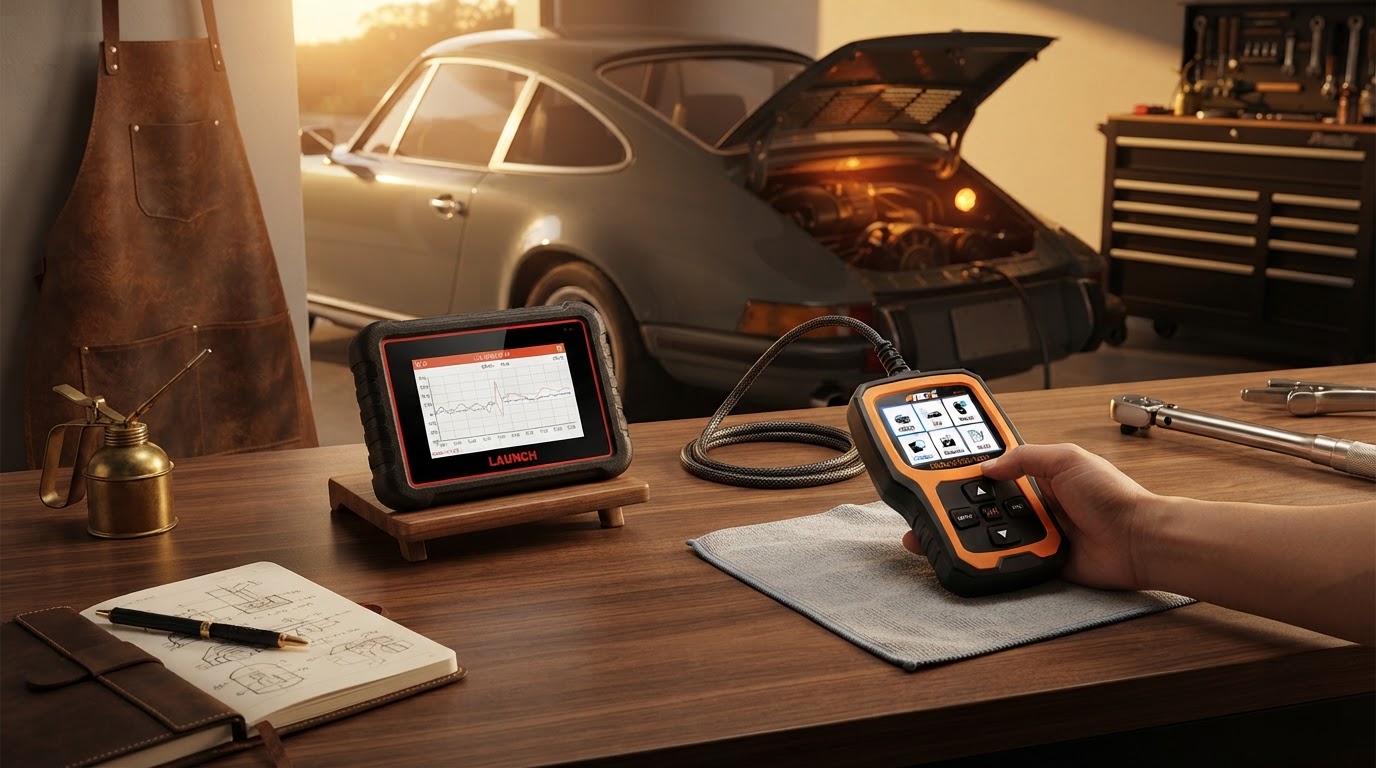
Launch CRP123I Price Drop vs ANCEL AD410 EVAP Testing
The conventional wisdom says that a higher price tag and more acronyms on the spec sheet equate to a better diagnostic investment. Dealnews.com recently highlighted a promotion for the Launch CRP123I V3.0 Elite for $124.34, representing a 40% discount from its $209 list price. While the market is rushing toward this multi-system tool, the data suggests that complexity often masks a lack of fundamental utility for the average DIYer.
According to Dealnews.com, the primary appeal of the Launch unit is its ability to cover ABS, SRS, and transmission codes in addition to standard engine diagnostics. However, here's the part nobody talks about: most check-engine lights are triggered by emissions failures, not transmission logic errors. When you run the math, paying $124 for a tool that lacks specific system integrity tests is a questionable allocation of capital. The ANCEL AD410, available through Car Engine Scanner, maintains a lower price point while providing a critical function the Launch unit often overlooks in its entry-level firmware: a dedicated EVAP system leak test.
For most vehicle owners, the most frustrating diagnostic hurdle is the P0442 or P0455 code. The ANCEL AD410 model number AD410 allows users to initiate a leak test by monitoring the integrity of the fuel tank system directly. This is a functional diagnostic step that goes beyond merely reading a code; it validates the repair. While the Launch CRP123I V3.0 Elite offers free shipping and a significant $84.66 price cut, as reported by Dealnews.com, it remains a passive listener rather than an active tester for these common vacuum-related issues.
Expert tip: When diagnosing a recurring check-engine light, always check the freeze frame data before clearing codes. If you are using a tool like the AD410 to monitor fuel tank pressure during an EVAP test, ensure the fuel level is between 15% and 85% to meet the ECU's enable criteria for the monitor to run.
Many enthusiasts looking for a portable diagnostic tool or an affordable OBD2 reader get distracted by the promise of transmission scanning. Unless you are experiencing shift delays, a basic engine scanner with live data graphing is more efficient. The focus should remain on EVAP system diagnostics if the goal is passing state inspections.
I’ll change my mind when multi-system scanners at the $100 price point include bi-directional controls for all four systems they claim to support, rather than just reading and clearing historical data.