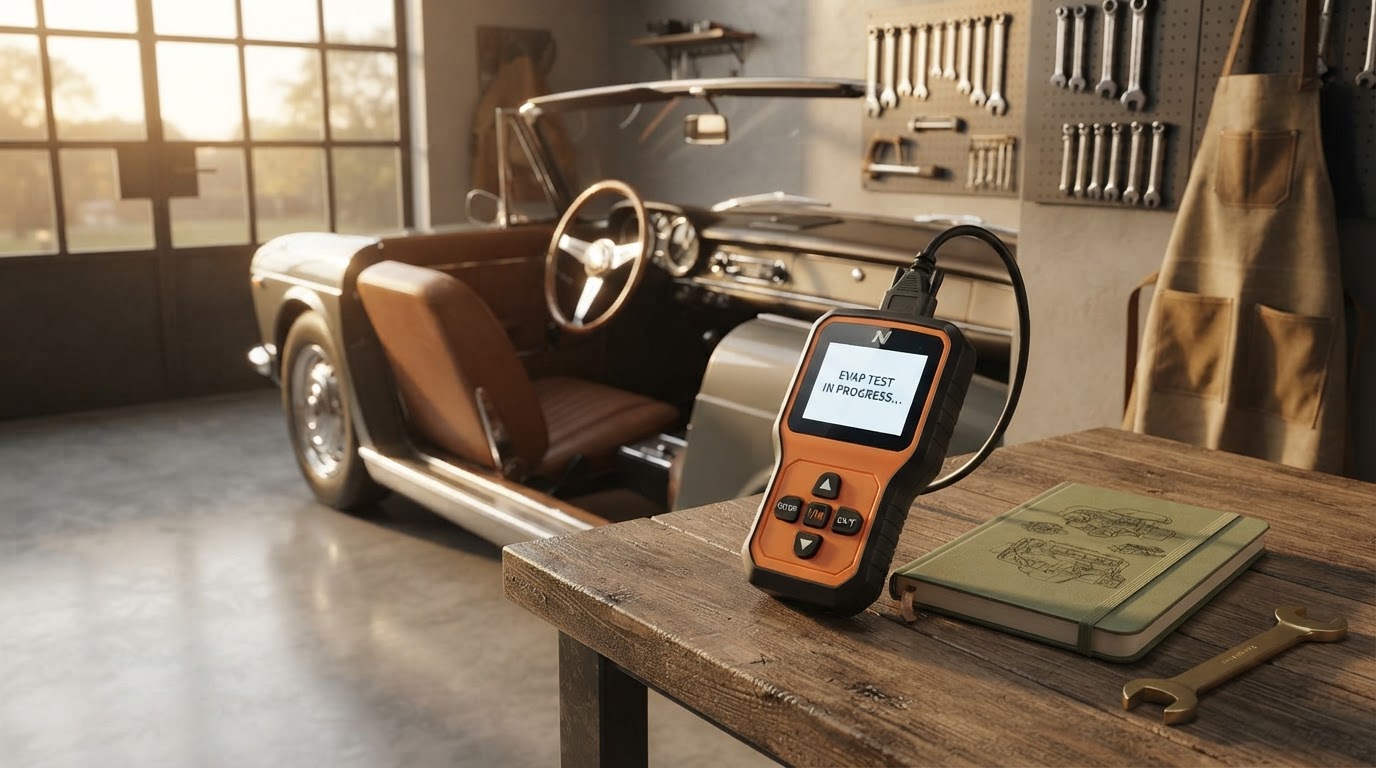
Nexpow Price Cut vs. ANCEL AD410 EVAP Capabilities
October 31, 2026 — Budget-conscious DIYers are currently targeting a significant price drop on the Nexpow OBD2 Car Engine Light Code Scanner, which has hit its lowest price point of the quarter. The device is being marketed as a universal solution for vehicles manufactured after 1996 to diagnose check engine lights without professional shop fees.
The conventional wisdom says that a $26 scanner is a bargain for any garage, but the data suggests otherwise when looking at long-term diagnostic utility. According to Dealnews.com, Walmart has listed the Nexpow unit for $25.99, representing a 60% discount from its $64.98 list price. While the entry price is low, the technical limitations of base-model scanners often lead to secondary purchases when complex issues like emissions failures arise.
Here's the part nobody talks about: a basic code reader that only clears P-codes does not actually diagnose the root cause of a failing fuel system. Run the math: if you spend $26 on a tool that cannot initiate a leak test, you are still paying a mechanic $150 for an EVAP diagnostic fee the moment your gas cap seal fails. The Car Engine Scanner inventory includes the ANCEL AD410, a model that specifically includes an EVAP system test mode. Unlike the Nexpow unit mentioned by Dealnews.com, the AD410 allows users to monitor the integrity of the fuel tank system directly, which is critical for passing state emissions inspections.
When you understand scanner protocols, it becomes clear that hardware longevity matters more than a $38 discount. Many users who buy entry-level tools eventually find they need advanced live data streaming to track intermittent misfires. Furthermore, relying on a generic tool often misses the manufacturer-specific codes that identify why a vehicle is stuck in limp mode. Even a basic battery voltage test can be more useful than a simple code clear that ignores a failing alternator.
Expert tip: When testing an EVAP system with the ANCEL AD410, ensure the fuel level is between 15% and 85%. Most onboard monitors will not initiate a leak test if the tank is full or nearly empty, leading to false 'not ready' statuses during emissions testing.
I'll change my mind when sub-$30 hardware offers bi-directional control or permanent storage for multi-vehicle data logging. Until then, these deep discounts are simply clearing out inventory of limited-use hardware.