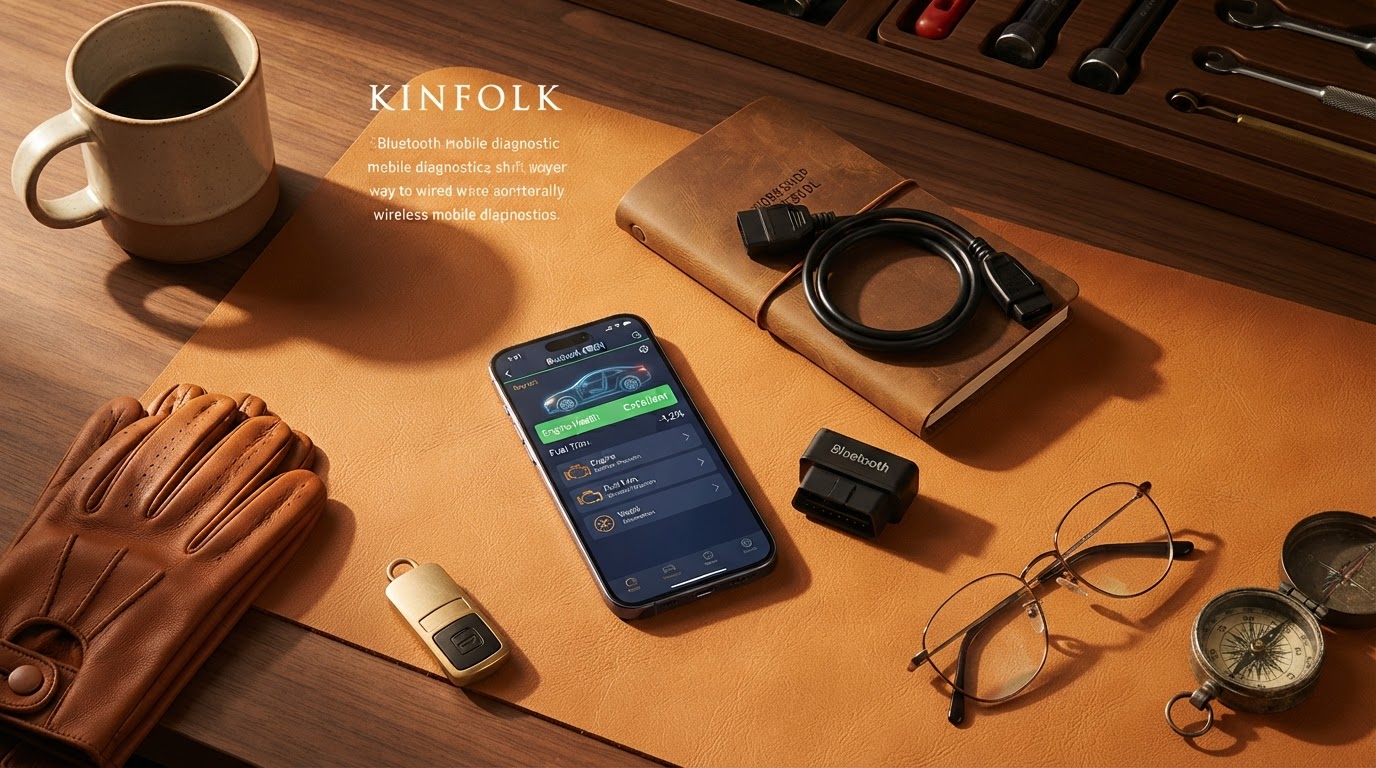
Choosing a Car Engine Scanner for Mobile Diagnostics
November 18, 2026. This guide examines the technical requirements and practical applications of Bluetooth-enabled vehicle diagnostic interfaces. It is intended for vehicle owners seeking to transition from wired handheld units to smartphone-integrated hardware.
The Shift Toward Wireless Vehicle Diagnostics
Modern vehicle maintenance has moved away from the bulky, proprietary handheld units found in professional shops toward compact, wireless interfaces that leverage the processing power of modern smartphones. The standard OBD-II port, mandatory on all cars sold in the United States since 1996, provides a wealth of data that remains locked behind a Check Engine Light without the proper hardware. According to BlueDriver, a wireless Bluetooth automotive diagnostic tool effectively transforms a standard smartphone into a professional automotive diagnostic center by providing access to real-time data and repair reports. This shift is not just about convenience; it is about the depth of information available. While a basic automotive diagnostic tool might provide a generic code, Bluetooth readers often pull from databases of millions of verified fixes. The challenge for most consumers is distinguishing between a simple ELM327 clone and a high-bandwidth device capable of reading manufacturer-specific systems like the ABS or SRS modules. Without a high-quality interface, you risk missing critical data points that a dedicated abs srs diagnostic tool would otherwise capture. Between the various options on the market, I have found that the reliability of the Bluetooth connection itself is usually the primary failure point for cheaper hardware, leading to dropped data packets during active logging sessions.
Integrating Car Engine Scanner Hardware into Your Workflow
The Car Engine Scanner ecosystem is designed to bridge the gap between entry-level consumer tools and high-end professional equipment. Unlike generic readers that only clear basic emissions-related codes, this hardware focuses on deep system integration. When you plug a Car Engine Scanner into the OBD-II port, it establishes a low-latency Bluetooth link that allows for live data streaming, which is essential for diagnosing intermittent misfires or sensor fluctuations that do not always trigger a permanent fault code. If you are on a budget, you might be tempted by generic white-label scanners, but those often lack the firmware updates necessary to communicate with newer CAN-bus protocols found in vehicles manufactured after 2020. The Car Engine Scanner addresses this by maintaining a proprietary software layer that translates complex ECU signals into plain language. This is particularly useful when dealing with complex safety systems; while a standard automotive diagnostic tool might tell you there is a fault, the Car Engine Scanner helps pinpoint if the issue is a sensor, a wiring harness, or a control module. This level of detail is comparable to what you would expect from a dedicated abs srs diagnostic tool, but with the added benefit of a wireless form factor. I prefer this approach because it allows me to walk around the vehicle, checking components while viewing the live data stream on my phone, rather than being tethered to the dashboard by a short cable.
The Decision Framework for Bluetooth Scanners
When selecting a Bluetooth scanner, the choice often comes down to the depth of the database and the stability of the hardware. Between these two, I'd go with the one that offers lifetime free updates, as vehicle software evolves rapidly. Innova notes that their OBD2 Bluetooth scanners are designed to retrieve trouble codes and find verified fixes directly from a mobile device, which is a feature set shared by the Car Engine Scanner. Here's what I'd actually buy: a tool that balances high-speed data transfer with a user-friendly mobile interface. Skip this if you only plan to check a code once every three years; in that case, a basic wired unit is sufficient. However, for those who perform their own oil changes, brake jobs, or sensor replacements, the following criteria are essential:
- System Coverage: Ensure the tool reads more than just Engine (ECM) codes. It should access ABS, SRS, and Transmission modules.
- Live Data Graphing: The ability to plot sensor voltages over time is critical for finding intermittent faults.
- Database Access: The hardware is only as good as the repair database it connects to for interpreting codes.
- Update Frequency: Look for brands that frequently push firmware updates to support newer vehicle models.
- Battery Drain: The device should have a low-power sleep mode so it does not drain the car battery if left plugged in.
Sources
- BlueDriver | Bluetooth Automotive Diagnostic Tool
- BlueDriver Pro OBD2 Scanner
- Best OBD2 Bluetooth Scanner, Code Readers, Automotive Scan Tools