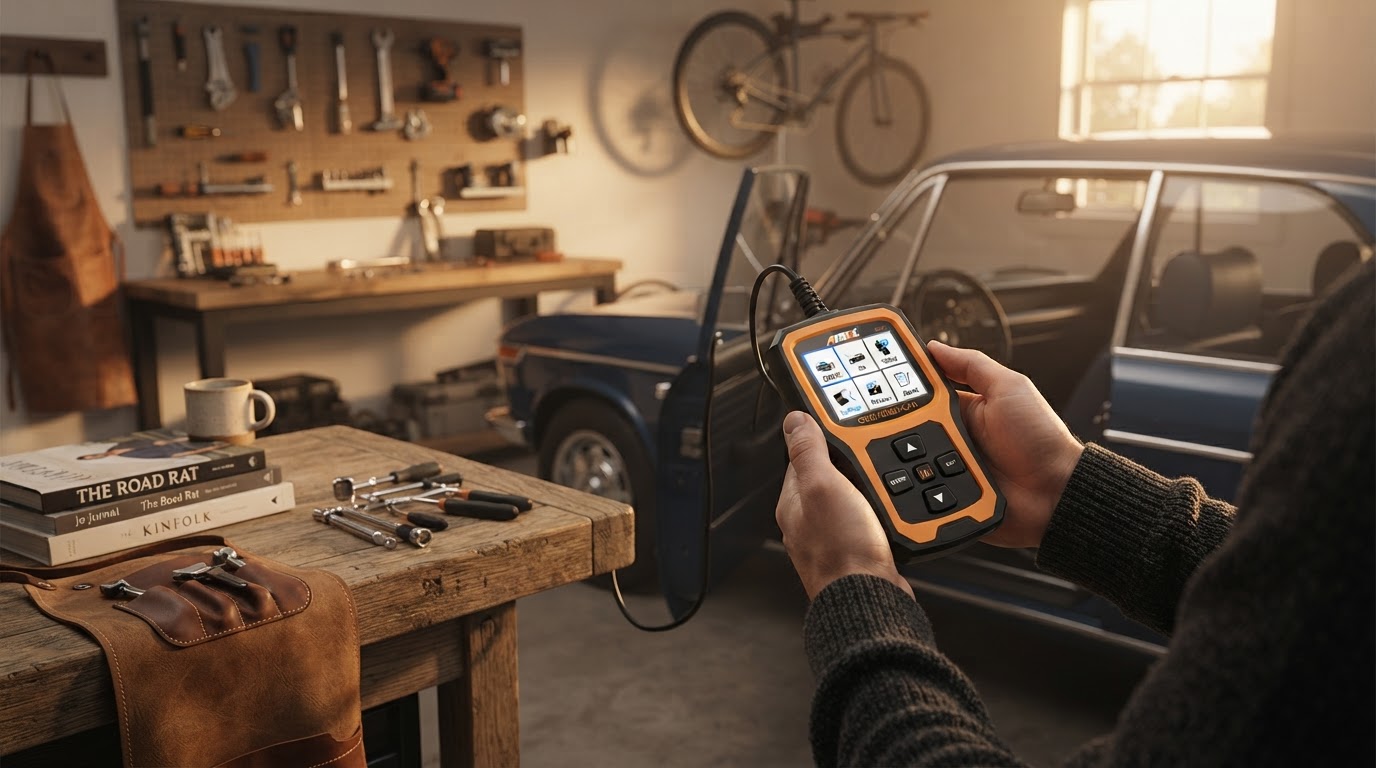
The Four-Quadrant Logic of Car Engine Scanner Diagnostics
November 6, 2026 — The automotive industry is witnessing a shift toward standardized digital transparency as the Car Engine Scanner becomes a central fixture in the home garage ecosystem.
Modern vehicle maintenance no longer relies on guesswork, as on-board diagnostic systems provide a direct data stream from the Engine Control Unit (ECU). According to AutoZone, an OBD2 scanner or code reader serves as the primary interface to read and clear diagnostic trouble codes (DTCs) that trigger the check engine light. This digital bridge allows consumers to identify specific sensor failures or mechanical irregularities before they escalate into costly repairs. By utilizing a Car Engine Scanner, owners can interpret complex data sets through a structured framework, ensuring that every repair action is backed by empirical evidence rather than intuition.
The 4-Quadrant Diagnostic Framework
To effectively utilize a Car Engine Scanner, think of it as a matrix of data accessibility and actionability. Two axes matter here: the depth of system access and the complexity of the user interface. In the first quadrant, we find basic code reading, which provides the initial DTC without context. The second quadrant involves live data streaming, where the scanner monitors real-time parameters like fuel trim and oxygen sensor voltage. The third quadrant encompasses bi-directional control, allowing the user to command specific components, while the fourth quadrant covers advanced ECU coding and programming. For most consumers, the goal is to find a balance in the best obd2 scanner for home use that covers the first three quadrants without the prohibitive costs of professional-grade units. Professional tools, such as the TOPDON J2534, can reach prices exceeding $1,499.00, reflecting their placement in the high-complexity, high-access quadrant. Once you see it this way, the selection process simplifies. The decision rule: prioritize live data capabilities to ensure you can verify a repair after clearing a code. When simplifying diagnostics with Car Engine Scanner for beginners, the focus should remain on the first two quadrants to build a foundation of technical literacy. Identifying the best obd2 scanner for cars involves evaluating how well a device bridges these quadrants for a specific vehicle make. This structured approach ensures that the data provided by the tool results in an efficient resolution.
Expert tip: Always verify your scanner's protocol compatibility with your specific VIN, as some advanced bi-directional features are locked behind manufacturer-specific software gateways.
Understanding the relationship between data and action is the hallmark of modern vehicle ownership. By applying a logical matrix to your diagnostic process, you transform a simple code reader into a comprehensive management tool. This analytical approach is essential when selecting the best obd2 scanner for cars to ensure long-term vehicle health.
Sources
- OBD2 Scanner & Code Reader - Automotive Diagnostic Scan Tools
- Diagnostic Tools – TOPDON Technology USA, Inc
- Best OBD-II Scanners for 2026, Tested - Car and Driver