
Top Common Reasons Your Check Engine Light Turns On
Primary Causes of Check Engine Alerts

When your vehicle's dashboard illuminates an alert light, identifying the root cause quickly is crucial. Vehicles built in 1996 and newer use electronic sensors to track everything from exhaust composition to engine timing. A failure in any connected sub-assembly generates a specific diagnostic code.
Among the top triggers are oxygen sensor failures, mass air flow sensor faults, and engine misfires caused by worn spark plugs or faulty ignition coils. Each of these components plays a direct role in maintaining correct air-fuel ratios and optimal combustion performance.
Fuel and Emissions System Breaches
Another major driver behind engine warnings involves the evaporative emissions setup. EVAP system leak test monitoring helps identify whether fuel vapors are leaking into the air. Something as simple as a cracked hose or an improperly secured gas cap compromises fuel tank system integrity monitoring, illuminating the warning light.
To understand the broader diagnostic framework across all vehicle systems, consult the main guide for comprehensive insight.
How Scanning Helps You Plan Next Steps
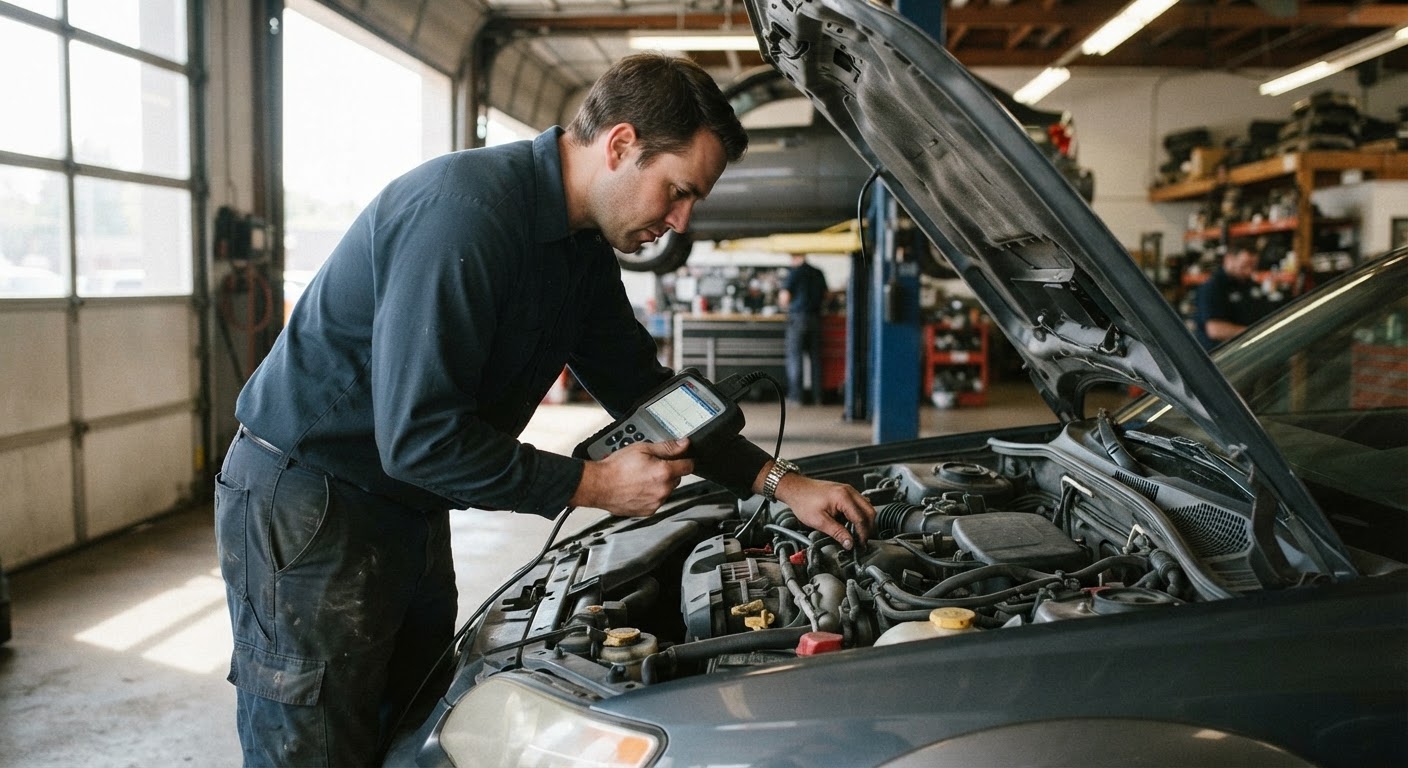
Instead of guessing which sensor is failing, using an Automotive OBD2 Scanner allows you to retrieve real-time diagnostic trouble codes directly. Identifying whether the issue is a temporary emissions glitch or an active misfire helps you determine whether immediate service is required or if a simple fix like tightening a fuel cap will resolve the alert.
Read the full guide: Why Is My Check Engine Light On? Causes, Diagnostics, and Solutions