Generic vs. Manufacturer-Specific OBD2 Codes: Complete Diagnostic Guide
Generic vs. Manufacturer-Specific OBD2 Codes: Complete Diagnostic Guide
Should you purchase an expensive factory diagnostic tool or rely on a standard OBD2 scanner for your check engine light? Failing to recognize code types often leads to misdiagnosing simple EVAP leaks or replacing functional sensors. Generic codes (P0, P2) are universal across all post-1996 US vehicles under SAE J2012 standards. Handheld scanners like the ANCEL AD410 decode these generic engine and EVAP fault codes instantly, while manufacturer-specific codes (P1) simply require cross-referencing OEM definition indexes after reading the code number.
Diagnostic Scenarios: Generic (SAE) vs. Manufacturer-Specific (OEM) Codes
| Diagnostic Scenario / Failure Mode | Generic SAE Code Example | Manufacturer-Specific (OEM) Code Example | Diagnostic Impact & Required Tooling | | --- | --- | --- | --- | | EVAP System Purge Valve Stuck Open | P0441 (EVAP Purge Flow Incorrect) | P1450 (Ford: Unable to Bleed Fuel Tank Vacuum) | Generic code flags the system; OEM code specifies failure state. ANCEL AD410 reads both code numbers for instant repair targeting. | | Engine Cylinder Misfire Detected | P0300 (Random/Multiple Cylinder Misfire) | P1316 (GM/Ford: Misfire Rate Exceeds Emissions Limit) | Generic code alerts to active misfire; OEM code indicates severe driver-side catalyst damage risk. Immediate freeze frame check required. | | Air-Fuel Ratio / O2 Sensor Slow Response | P0171 (System Too Lean - Bank 1) | P1131 (Toyota/Ford: Lack of Upstream Switch - Lean) | Generic code confirms vacuum or fuel delivery issue; OEM code pinpoints specific sensor switching failure. Solved using live fuel trim data. | | State Smog Inspection Readiness Failure | P0420 (Catalyst System Efficiency Below Threshold) | P1000 (OBD System Readiness Test Incomplete) | Clearing generic P0 codes resets I/M monitors to 'Not Ready,' causing immediate smog test rejection. Repairs must precede code resets. |
Compare how generic standard codes and manufacturer-specific codes behave during common vehicle failure modes.
Trade-Offs of Relying on Generic vs. Enhanced OEM Diagnostics
Photo by Tim Samuel on Pexels
Understanding the strengths and limitations of generic standard codes versus manufacturer-specific diagnostic routines prevents unnecessary equipment expenses and diagnostic blind spots.
Generic OBD2 Diagnostic Codes (SAE J2012 Standard)
- Pros: Universal compatibility across all 1996+ US light-duty vehicles regardless of make or model; covers 100% of emissions-related engine failure modes; accessible via cost-effective standalone handheld scanners like the ANCEL AD410.
- Cons: Standard definitions may lack granular component location details on complex twin-turbo or multi-bank engine layouts.
- Failure Modes: Erasing generic P0 codes before resolving mechanical faults clears Freeze Frame data and resets I/M readiness monitors, leading to automated state smog test rejections.
Manufacturer-Specific Enhanced Codes (OEM P1/P3/B/C/U)
- Pros: Pinpoints precise OEM actuator states, secondary circuit voltages, and advanced module communications (Body, Chassis, Network).
- Cons: Standard code readers may display 'Definition Unknown' on-screen, requiring manual lookup in factory service documentation.
- Failure Modes: Misinterpreting OEM-specific definitions can prompt high-cost module replacement when the underlying fault is simply a blown ground fuse or wiring harness oxidation.
Pro Mechanic Insight: Decoding the 5-Character DTC Structure
Every diagnostic trouble code (DTC) follows a strict 5-character alphanumeric architecture defined by SAE J2012 and ISO 15031-6. Never guess what a code means—break down its exact structure on your shop bench:
Mechanic Bench Note: When an ANCEL AD410 displays a code like `P0442`, the 2nd digit (`0`) confirms it is a generic SAE standard code. If it displays `P1450`, the 2nd digit (`1`) tells you it is a Ford OEM specific code that requires checking Ford purge valve vacuum hold specifications.
Decision Flow: Do You Need an OEM Scanner or Is a Handheld Code Reader Enough?
- Is your Check Engine Light (MIL) illuminated with a 5-character code starting with P0, P2, or P34-P39? → Yes: Use a standalone handheld scanner (ANCEL AD410). Generic SAE codes provide 100% of diagnostic data, live sensor streams, and freeze frame parameters.. No: Examine the second character of your fault code.
- Is the code an OEM manufacturer-specific powertrain code starting with P1 or P30-P33? → Yes: Use the ANCEL AD410 to read the numeric DTC and freeze frame values, then look up the exact OEM definition in a free DTC lookup database or service manual.. No: Determine if the light is for ABS, SRS/Airbag, or Body Control (B, C, U prefix).
- Does the repair require bi-directional control, ECU re-flashing, or SRS/ABS module recoding? → Yes: Requires a professional multi-system factory bi-directional scan tool or dealer console.. No: Standard OBD2 diagnostic reader fully handles all engine, fuel trim, and EVAP system troubleshooting.
Immediate Diagnostic Action Plan
Your decision: Determine whether your check engine light code is a standard SAE generic code (P0) or an OEM-specific code (P1).
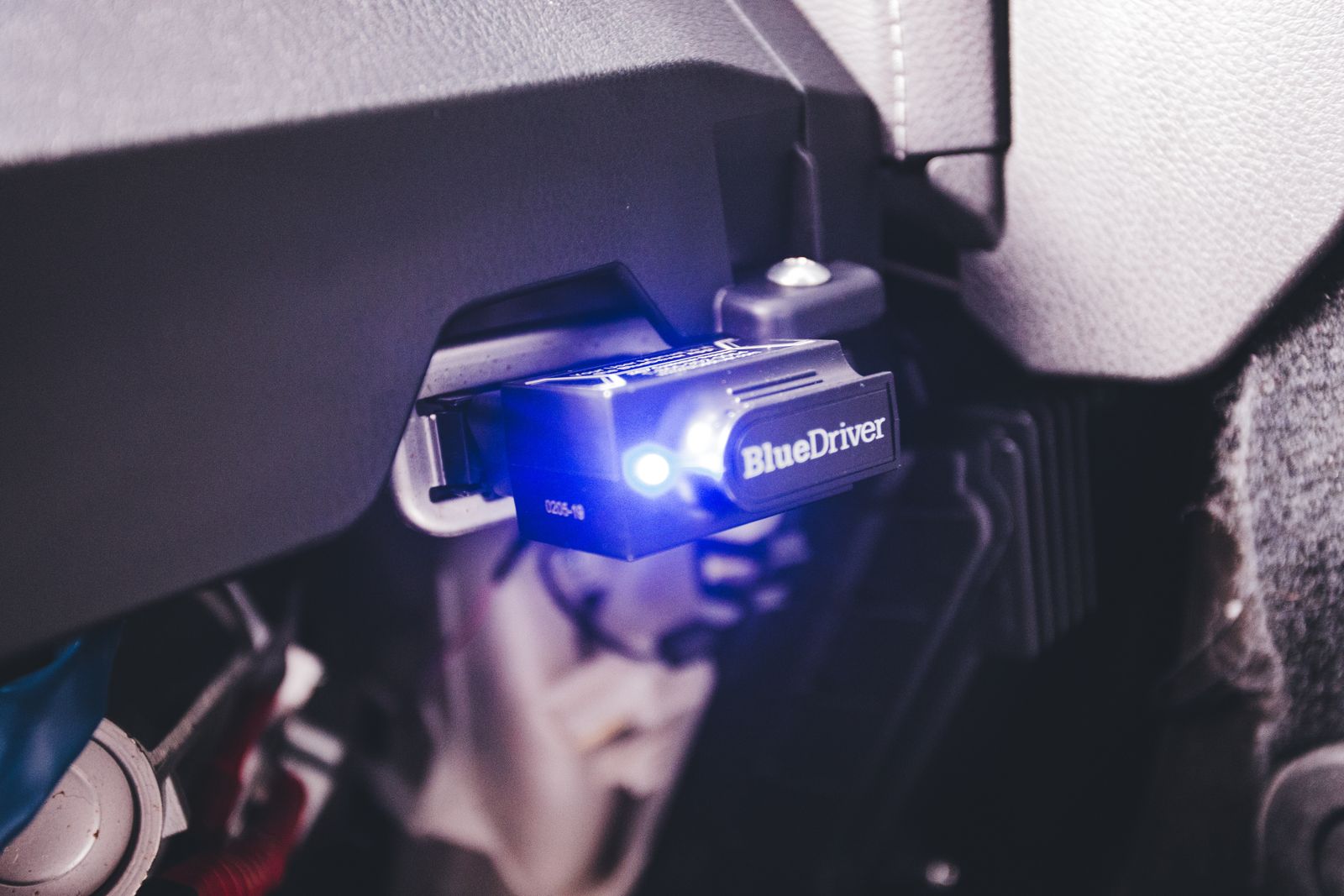
Do this next: Plug an ANCEL AD410 scanner into your vehicle's 16-pin DLC port under the driver dashboard with ignition key ON and engine OFF. Record active codes, pending codes, and freeze frame parameters before running an EVAP leak test.
Related resource: SAE J2012 Standard Diagnostic Trouble Code Definitions Guide
ANCEL AD410 Enhanced OBD2 Code Reader for fast, reliable generic and enhanced emissions diagnostics.
Follow these logical steps to diagnose your vehicle's check engine light without incurring dealer fees.
Essential Summary: Generic vs. OEM Trouble Codes
Keep these key rules in mind whenever your check engine light activates:
- SAE J2012 Standardization: All post-1996 vehicles sold in the United States must support standard generic P0 codes for core engine and emissions diagnostics.
- The Second Character Rules: A 2nd character of `0` indicates a universal generic code. A 2nd character of `1` indicates an OEM manufacturer-specific code.
- Full Diagnostic Functionality: Handheld scanners like the ANCEL AD410 retrieve both generic P0 and enhanced P1 fault codes, displaying Freeze Frame data and live fuel trim metrics.
- Avoid Smog Check Rejection: Never erase diagnostic trouble codes immediately before a state emissions test. Clearing codes resets I/M readiness monitors to 'Not Ready,' ensuring an immediate failure.
- EVAP Integrity Testing: Standard generic EVAP codes (P0440-P0457) can be directly tested using the built-in EVAP system leak test feature on the ANCEL AD410.
Tool Selection Guide: Matching Your Vehicle Issues to the Right Scanner
For over 90% of check engine light triggers involving oxygen sensors, ignition misfires, mass air flow, and EVAP fuel tank integrity, a standalone handheld OBD2 scanner provides complete diagnostic capabilities without ongoing subscription fees.
Best choice for
- Handheld OBD2 Reader (ANCEL AD410) — Extracts exact P0 and P1 codes, displays live PID sensor data, reads Freeze Frame parameters, and monitors EVAP fuel tank leak integrity.
- ANCEL AD410 + Free Online OEM Database — Retrieves the exact 5-character numeric code string, allowing fast lookups of factory repair bulletins without paying dealer fees.
- Clearing diagnostic trouble codes right before driving into a state inspection station.
- Replacing expensive electronic control modules prior to inspecting primary wiring harness grounds and battery terminal voltage.
- Dealer-Level Bi-Directional Scan Console — Only necessary if key programming, immobilizer re-flashing, or advanced body control module actuations are required.
Recommended Diagnostic Tool: ANCEL AD410 Enhanced Code Reader
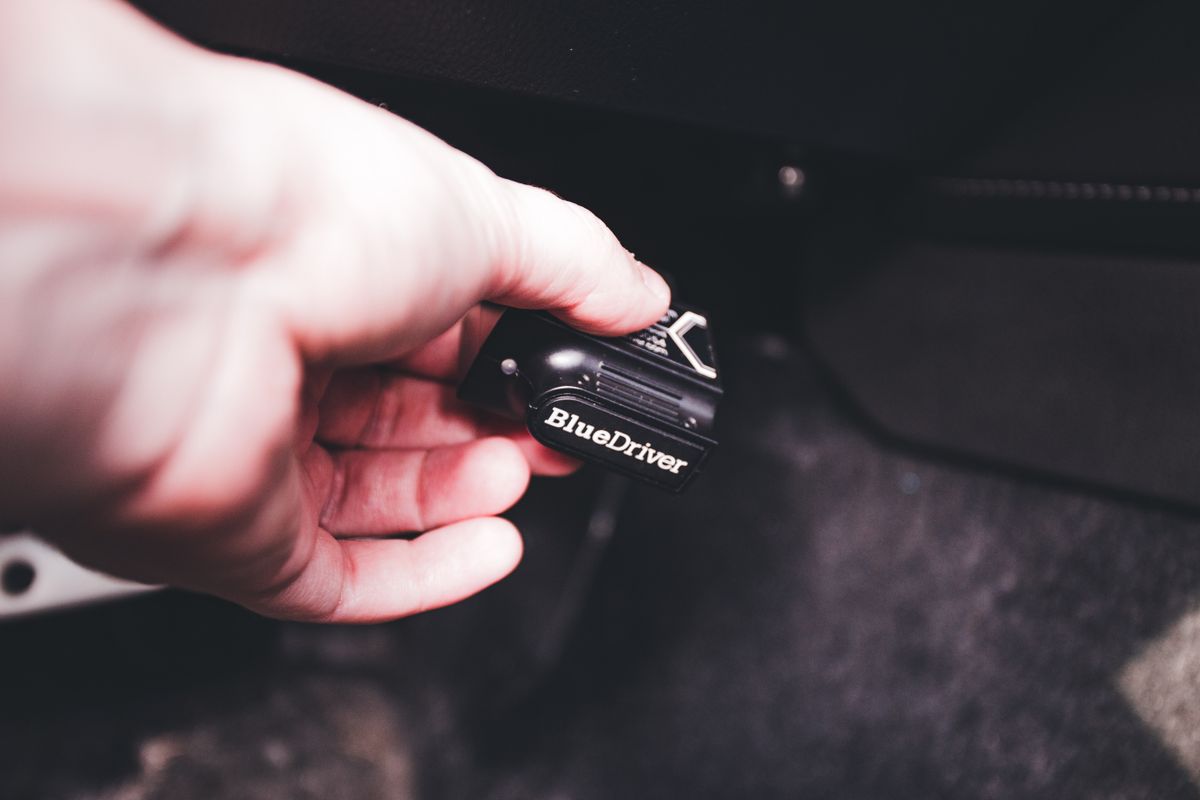
Photo by Erik Mclean on Pexels
For vehicle owners and DIY mechanics needing fast, accurate check engine light diagnostics, the ANCEL AD410 Enhanced OBD II Vehicle Code Reader delivers professional performance in an easy-to-use handheld package.
Why the ANCEL AD410 Belongs in Your Tool Matrix:
- Comprehensive DTC Reading: Instantly pulls active, pending, and permanent generic (P0, P2, P3, U0) and manufacturer-specific (P1, P3, U1) codes across all OBD2-compliant US vehicles.
- EVAP System Leak Test: Features dedicated EVAP monitoring to initiate leak testing of the vehicle's fuel tank system, isolating evaporative failure modes like loose gas caps or failing purge solenoids.
- Freeze Frame & Live Data: Captures critical engine operating conditions (coolant temperature, engine RPM, calculated load, short/long-term fuel trims) the exact second a fault code triggers.
- Built-in DTC Lookup Library: Includes an integrated lookup database to decode code definitions on a crisp color TFT screen without needing an internet connection.
- Rugged & Compact Design: Solid black/yellow housing built for shop environments with plug-and-play power directly from the vehicle's 16-pin DLC port.
Real-World Diagnostic Case Studies: Generic vs. OEM Code Resolution
Case Study 1: Evaporative Emission Fault (Generic P0442 vs. Ford OEM P1450) — A 2018 Ford F-150 illuminates the Check Engine Light. An ANCEL AD410 scan retrieves code P1450. Cross-referencing Ford OEM indexes reveals 'Unable to Bleed Fuel Tank Vacuum.' Using the AD410 live data screen, the mechanic observes fuel tank pressure dropping excessively during purge command. Replacing the stuck-open canister purge valve resolves the issue. Had it been generic P0442 (Small EVAP Leak), the technician would inspect the gas cap and filler neck seal instead.
Case Study 2: Engine Misfire under Load (Generic P0301 vs. Toyota OEM P1300) — A 2015 Toyota Camry stutters while accelerating uphill. Scanning with the ANCEL AD410 retrieves generic code P0301 (Cylinder 1 Misfire Detected). The technician swaps the Cylinder 1 ignition coil to Cylinder 2 and re-scans; the code shifts to P0302, confirming a failed coil pack. Standard generic code tracking resolves the problem in under 15 minutes without expensive dealer tools.
Examine how practical diagnostic scenarios unfold when encountering generic versus OEM-specific fault codes.
Prior to 1996, automotive manufacturers utilized fragmented, proprietary diagnostic protocols. Diagnosing a General Motors vehicle required a completely different tool, cable, and software stack than diagnosing a Ford or Chrysler. The implementation of the On-Board Diagnostics II (OBD2) mandate by the U.S. Environmental Protection Agency (EPA) under Clean Air Act amendments fundamentally changed auto repair.
The Role of SAE J2012 and ISO 15031-6
To harmonize emissions monitoring across all passenger cars and light trucks sold in the United States, the Society of Automotive Engineers (SAE) established standard J2012. This standard mandates that every vehicle manufacturer must utilize a universal 16-pin Data Link Connector (DLC) located within reach of the driver, support standardized communication protocols (such as CAN, ISO 9141, and KWP2000), and implement standard generic diagnostic trouble codes.Generic codes—designated by a zero as the second character (e.g., P0171, P0300, P0420)—are identical in definition across every auto brand. A P0420 code on a Chevrolet Silverado indicates 'Catalyst System Efficiency Below Threshold' just as it does on a Honda Civic or BMW 3 Series. This regulatory standard empowers DIY mechanics and independent repair shops to diagnose engine performance and emissions failures using accessible handheld tools like the ANCEL AD410.
Where Manufacturer-Specific Codes Fit In
While SAE J2012 standardized core emissions codes, it also allowed vehicle manufacturers to reserve code blocks for enhanced diagnostics. These manufacturer-specific codes—designated by a '1' as the second character (e.g., P1131, P1450)—allow carmakers to monitor proprietary hardware, complex variable valve timing actuators, or advanced multi-stage intake manifolds.Because handheld tools like the ANCEL AD410 pull the exact numeric string for both P0 and P1 codes directly from the Powertrain Control Module (PCM), mechanics are never locked out of enhanced diagnostics. Reading the numeric DTC gives you the precise index needed to look up OEM factory service bulletins immediately.
Further Reading on OBD2 Diagnostics
Expand your automotive diagnostic expertise with these technical guides:
- How to Read and Decipher OBD2 Diagnostic Trouble Codes (DTCs)
- Troubleshooting EVAP Trouble Codes: Diagnosing P0440 Through P0457
- Standard vs Enhanced OBD2 Scanners: Protocol Compatibility & Diagnostic Capabilities
- How to Read and Decode OBD2 Freeze Frame Data When a Check Engine Light Triggers
Frequently Asked Questions: Decoding Generic & OEM DTCs
Find clear, expert answers to common diagnostic code questions.
Final Diagnostic Decision & Recommended Action
Your decision: Choose a reliable, direct-connect OBD2 scanner to diagnose your vehicle's check engine light without paying unnecessary dealer fees.
Do this next: Order the ANCEL AD410 Enhanced OBD2 Scanner, plug it into your vehicle's 16-pin DLC port, extract stored DTCs, review Freeze Frame data, and run an EVAP system leak test to identify faults accurately.
Related resource: SAE J2012 Standard Diagnostic Trouble Code Definitions Guide
ANCEL AD410 Enhanced OBD2 Code Reader for handheld diagnostic independence.
Take control of your vehicle maintenance today by utilizing the right diagnostic process.
Cover photo by Erik Mclean on Pexels.