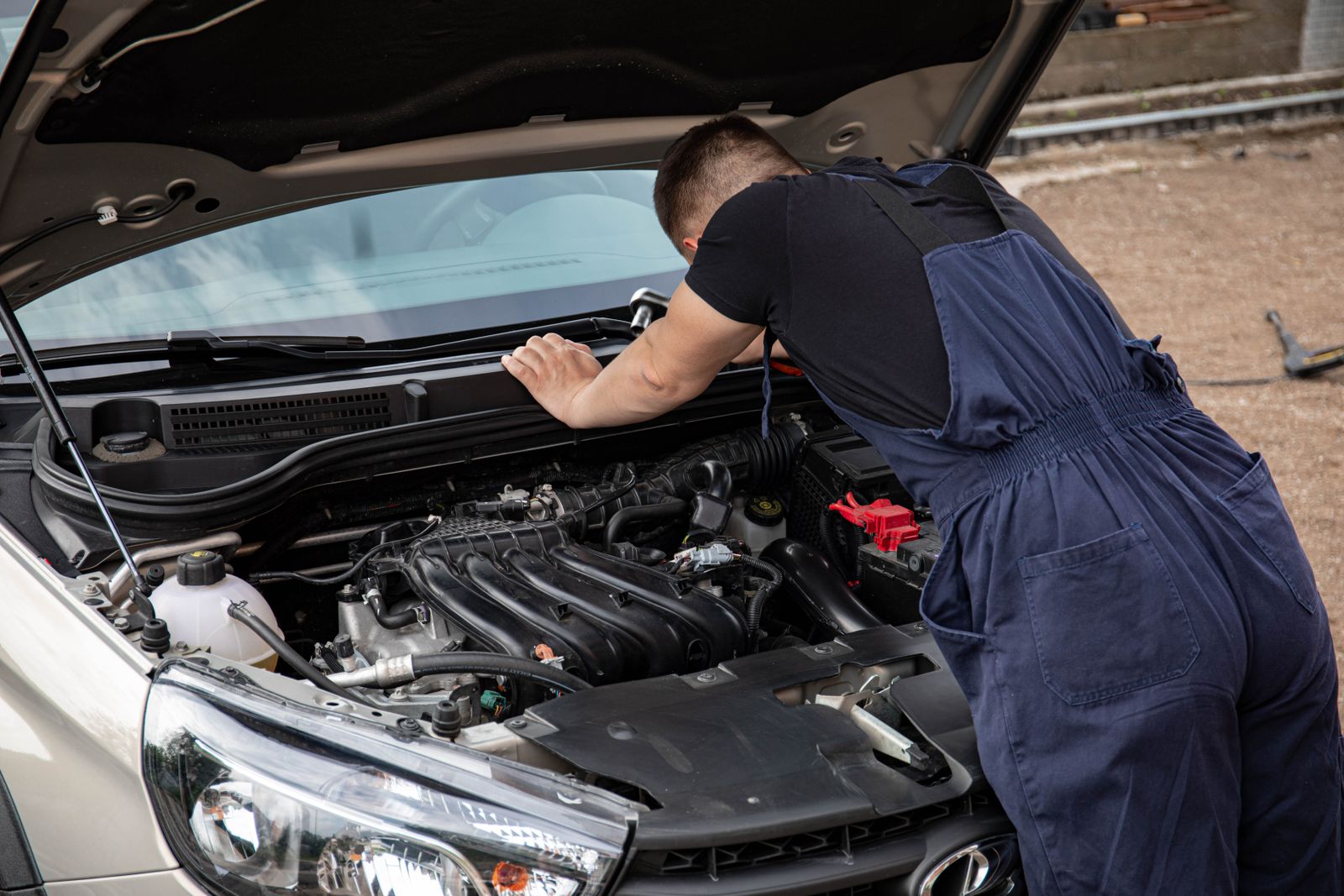
How to Reset Check Engine Light and Test EVAP Leak System with ANCEL AD410
Should you clear your Check Engine Light immediately after it comes on? No. Clearing diagnostic trouble codes (DTCs) without diagnosing the underlying fault erases crucial Freeze Frame data and resets your vehicle's emissions monitors to 'Not Ready', causing an automatic failure at state smog inspections.
To properly reset a Check Engine Light using the ANCEL AD410 Enhanced OBD2 Scanner, connect the device to your vehicle's 16-pin Data Link Connector (DLC), switch the ignition key to ON (engine OFF), select Diagnostics -> Read Codes to record all active and pending faults, execute necessary physical repairs, and then select Erase Codes. Always confirm system integrity through an EVAP drive cycle before driving to an inspection station.
ANCEL AD410 Navigation & Diagnostic Flowchart
- 1. Connect ANCEL AD410 to 16-pin DLC port under dash. Turn Ignition key ON (Engine OFF). Tool powers on automatically. Press OK on 'Diagnostics'. → Yes: Proceed to Step 2. No: Check DLC port fuse if scanner fails to power on..
- 2. Select 'Read Codes' -> Stored Codes. Are EVAP DTCs (P0440, P0442, P0455, P0456) present? → Yes: Select 'Freeze Frame' to record engine parameters at time of failure.. No: Check 'Pending Codes' or exit to inspect live powertrain data..
- 3. Inspect physical components: Gas cap seal, vacuum hoses, purge valve, vent solenoid. Perform physical repair or cap tightening. → Yes: Proceed to Code Clear sequence.. No: Do not erase codes yet; repair underlying leak source first..
- 4. Select 'Erase Codes' in main diagnostic menu. Confirm reset with OK button. Verify instrument cluster Check Engine Light turns off. → Yes: Proceed to Drive Cycle Verification.. No: Re-check ignition switch position (Must be ON, Engine OFF)..
- 5. Perform EVAP Drive Cycle (Fuel tank 1/4 to 3/4 full, overnight cold soak). Select 'I/M Readiness' on AD410. Is EVAP Monitor 'Ready'? → Yes: Vehicle is fully repaired and ready for State Smog Inspection.. No: Drive additional varied city/highway miles under enable conditions..
EVAP Failure Modes & Diagnostic Code Matrix
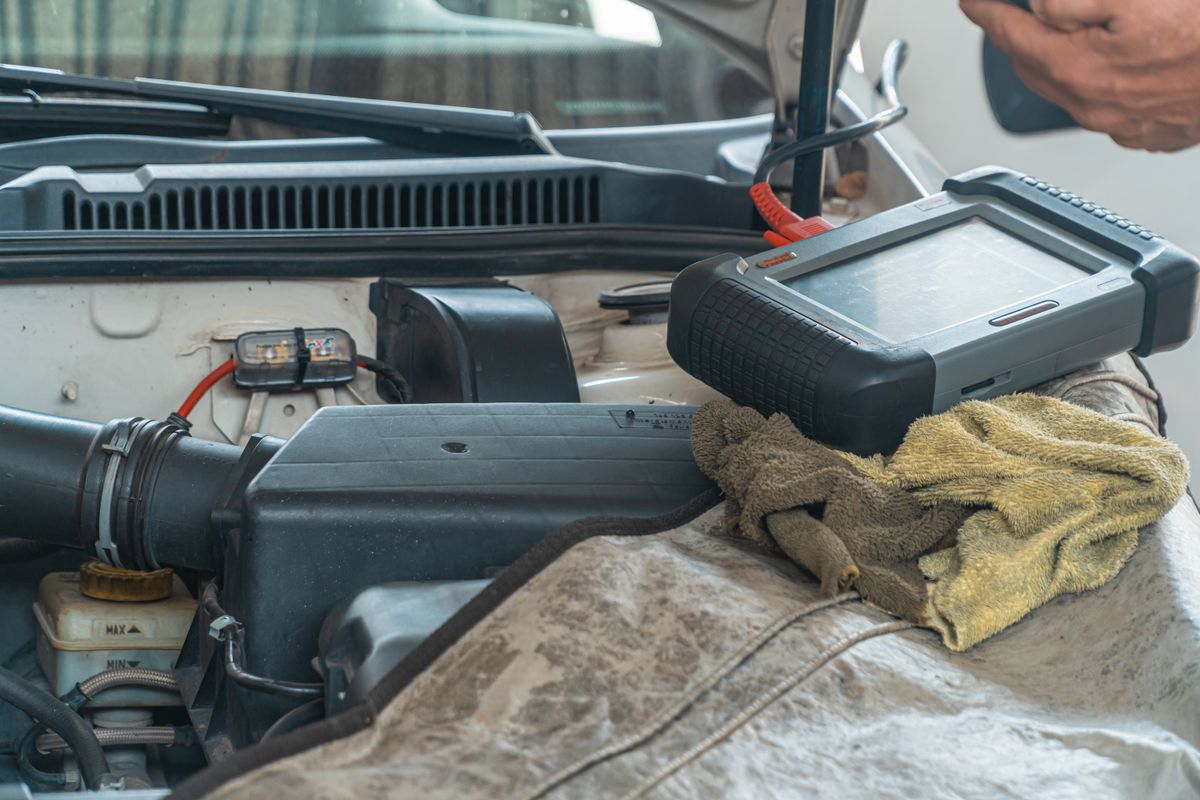
Photo by Jose Ricardo Barraza Morachis on Pexels
| Failure Mode & Code | Affected Component | Primary Symptoms | ANCEL AD410 Diagnostic Focus | Recommended DIY Fix |
| --- | --- | --- | --- | --- |
| P0455 - Gross EVAP System Leak | Gas Cap / Filler Neck / Purge Line | Check Engine Light ON, strong fuel odor near rear wheel well | Read Stored Codes; check Freeze Frame fuel level and purge pressure | Inspect, clean, or replace loose/damaged gas cap; check filler neck seal |
| P0442 - Small EVAP System Leak | Purge Valve / Vent Solenoid O-Ring | Check Engine Light ON, no noticeable drivability issues | Check Pending Codes; inspect I/M Readiness EVAP monitor state | Inspect purge valve seating, replace cracked vacuum line elbow |
| P0440 - General EVAP System Malfunction | EVAP Canister / Vacuum Hoses | Check Engine Light ON, failed state smog emissions test | Review Live Data stream for manifold absolute pressure and fuel tank pressure | Trace charcoal canister lines for cracks, disconnections, or fuel saturation |
| P0456 - Very Small EVAP Leak | Evaporative Pressure Sensor / Vent Cap | Intermittent Check Engine Light after long highway drives | Access Mode $08 EVAP Leak Test monitoring / I/M Readiness status | Perform smoke test or replace aging canister vent solenoid seal |
EVAP failure modes manifest through distinct trouble codes and physical symptoms. Identify your active DTC below before attempting a scanner reset.
Mechanic's Advice: Why EVAP Monitors Require Specific Enable Conditions
> Master Tech Tip: "I see DIYers clear EVAP codes at 8:00 AM and drive straight to the smog station at 8:15 AM, only to get turned away for 'Monitors Not Ready'. The engine control module (ECM) only tests the EVAP system under very strict parameters known as 'Enable Criteria'. Your fuel tank must be between 15% and 85% full (ideally 1/4 to 3/4 tank). If your tank is bone dry or completely topped off, the ECM will pause the EVAP monitor indefinitely. Furthermore, the car requires a 'cold soak'—meaning it must sit parked turned off for at least 6 to 8 hours until engine coolant temperature drops within 10°F of ambient air temperature. Let the car cool down overnight, keep 1/2 tank of gas, and use your ANCEL AD410's one-click I/M Readiness key to verify 'Ready' status before wasting a trip to the inspection station."
Diagnostic Decision Tree: Fix First or Erase Code?
- Did you record the DTC code and Freeze Frame data from your ANCEL AD410? → Yes: Proceed to component inspection.. No: STOP. Navigate to Read Codes -> Freeze Frame and document fuel trim, RPM, and temperature values.
- Is the fault a minor cap leak (e.g., P0455/P0457) caused by an untightened fuel cap? → Yes: Tighten cap to 3 clicks, erase codes with AD410, and perform a 30-minute varied drive.. No: Perform visual/mechanical diagnostic on purge valve, vent solenoid, and canister hoses.
- Have physical repairs or component replacements been completed? → Yes: Use ANCEL AD410 to Erase Codes, then verify I/M Readiness monitors complete.. No: Do NOT erase codes yet. Erasing codes without repair will trigger an immediate hard fault upon monitor execution.
Immediate Action Plan After Code Reset
Your decision: Verify whether your vehicle requires an immediate smog check or general daily driving verification after resetting codes.
Do this next: Document all cleared trouble codes, verify fuel level is between 30% and 70%, perform an overnight cold soak, and execute an EVAP drive cycle. Use the ANCEL AD410 one-click I/M key to confirm all emissions monitors show 'Ready'.
- Read next: How to Reset EVAP Readiness Monitors and Pass State Smog Inspections
- Read next: How to Diagnose EVAP Leak Codes (P0440-P0457) at Home
ANCEL AD410 Enhanced OBD2 Scanner Auto Check Engine Light Scan Tool
Once you have executed an 'Erase Codes' command on your ANCEL AD410, execute these precise follow-up actions to prevent repeat faults.
Key Takeaways for Safe Code Resetting
- Clearing codes with the ANCEL AD410 erases stored fault history and Freeze Frame memory but does not fix physical mechanical failures.
- EVAP system monitors will not run if the fuel tank is over 85% full or under 15% full.
- Permanent Diagnostic Trouble Codes (PDTCs) cannot be cleared by any scan tool; they only erase after the ECM completes its internal verification drive cycle.
- Always inspect simple, high-failure hardware (gas cap rubber seals, purge line fittings) before replacing expensive electronic sensors.
- The ANCEL AD410 features hotkeys for instant I/M Readiness status checking, allowing you to monitor drive cycle progress in real time.
Featured Diagnostic Tool for DIY Mechanics
Take command of your vehicle's engine management and EVAP system diagnostics without paying expensive dealership diagnostic fees.
Choosing the Right Diagnostic & Reset Strategy
Deciding whether to clear your Check Engine Light immediately depends on whether you have documented DTCs and diagnosed the physical EVAP component failure.
Best choice for
- Inspect, tighten cap, scan with ANCEL AD410, and monitor I/M readiness — Ensures physical fault is resolved before initiating an electronic reset and monitor reset.
- Complete full EVAP drive cycle without clearing codes manually if monitors are already 'Ready' — Erasing codes resets all I/M readiness monitors to 'Not Ready', resulting in an automatic smog inspection failure.
- Clearing codes immediately before driving into a state smog test station.
- Erasing DTCs without writing down stored codes and Freeze Frame data.
- Attempting an EVAP leak test when the vehicle's fuel tank level is under 15% or over 85%.
- Self-clearing via vehicle drive cycles — Certain minor EVAP leaks (e.g., loose gas cap) clear automatically after 3 to 4 clean drive cycles without resetting scanner memory.
Pending vs. Permanent vs. Stored EVAP Codes
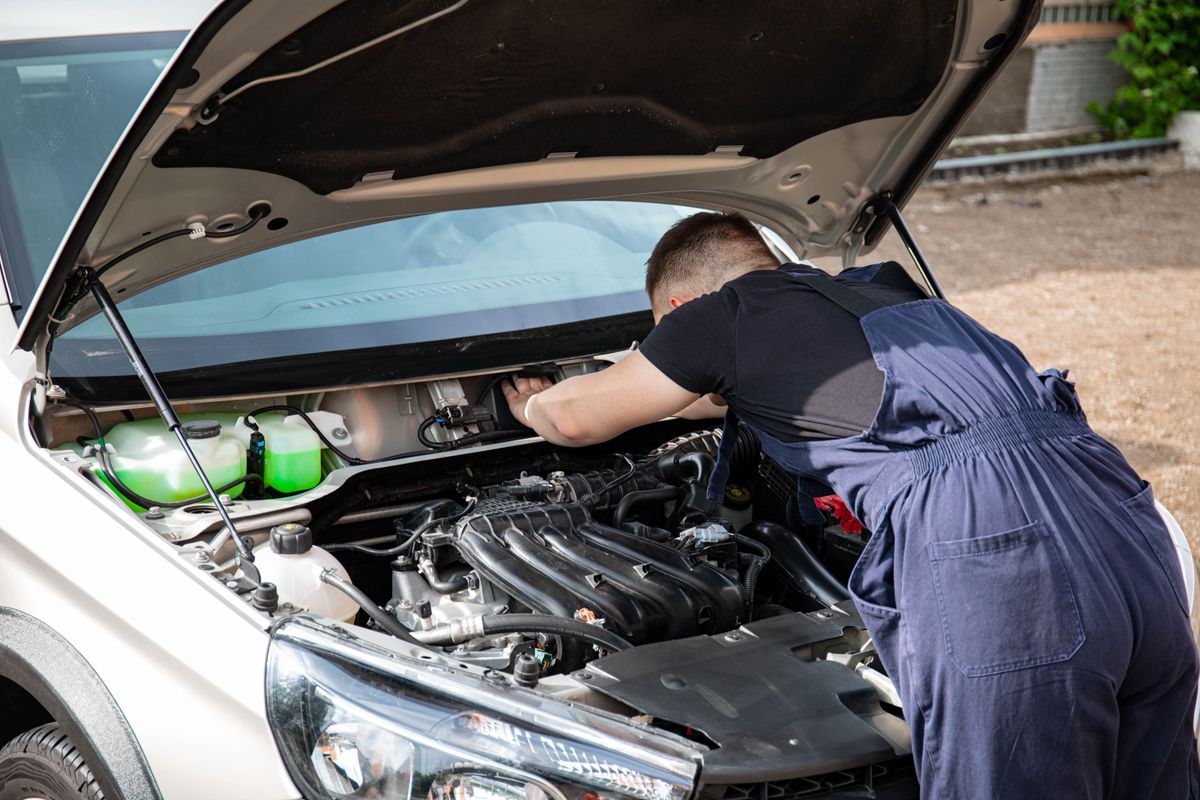
Photo by Sergey Meshkov on Pexels
| Code Category | Trigger Condition | Erased via Scanner? | Impact on Smog Readiness |
| --- | --- | --- | --- |
| Stored (Hard) Codes | Fault detected across multiple consecutive drive cycles | Yes (via Erase Codes command) | Causes immediate smog test failure; clearing resets I/M monitors |
| Pending Codes | Fault detected during single drive cycle; awaiting confirmation | Yes (via Erase Codes command) | Will not illuminate check engine light immediately; can prevent monitor readiness |
| Permanent Codes (PDTC) | Mandated by CARB/EPA; confirmed severe or persistent fault | NO (Scanner cannot erase) | Clears ONLY when ECM successfully runs EVAP monitor and passes self-test |
Understanding code classifications helps you determine why certain lights remain on or return after clearing.
Step-by-Step Instructions: Resetting Codes & Running EVAP Leak Test with ANCEL AD410
Follow this step-by-step procedure to retrieve error codes, perform EVAP diagnostics, and execute a complete code reset.
Critical Mistakes That Cause Check Engine Lights to Return Immediately
Avoid these standard diagnostic pitfalls to ensure your EVAP repairs remain permanent.
Frequently Asked Questions About ANCEL AD410 & EVAP Testing
Find clear, direct answers to common questions regarding diagnostic code clearing and EVAP diagnostics.
Explore Related OBD2 Diagnostic & Smog Readiness Guides
Expand your diagnostic knowledge with our comprehensive DIY vehicle repair guides:
- How to Diagnose EVAP Leak Codes (P0440 to P0456) Like a Pro - Step-by-step physical inspection technique for vacuum lines and purge valves.
- Understanding OBD2 Freeze Frame Data - How to read engine parameter snapshots when fault codes trigger.
- State Smog Readiness Monitor Guide - Detailed drive cycles for Ford, GM, Toyota, and Honda vehicles.
Final Diagnostic Verification
Your decision: Determine if your Check Engine Light is caused by a loose gas cap, a faulty purge valve, or an active EVAP leak before resetting scanner memory.
Do this next: Document all fault codes and freeze frame data with your ANCEL AD410, execute necessary repairs, clear codes, and complete an EVAP drive cycle.
- Read next: How to Reset EVAP Readiness Monitors and Pass State Smog Inspections
ANCEL AD410 Enhanced OBD2 Scanner
Wrap up your diagnostic workflow using your ANCEL AD410 scan tool.
Cover photo by Sergey Meshkov on Pexels.