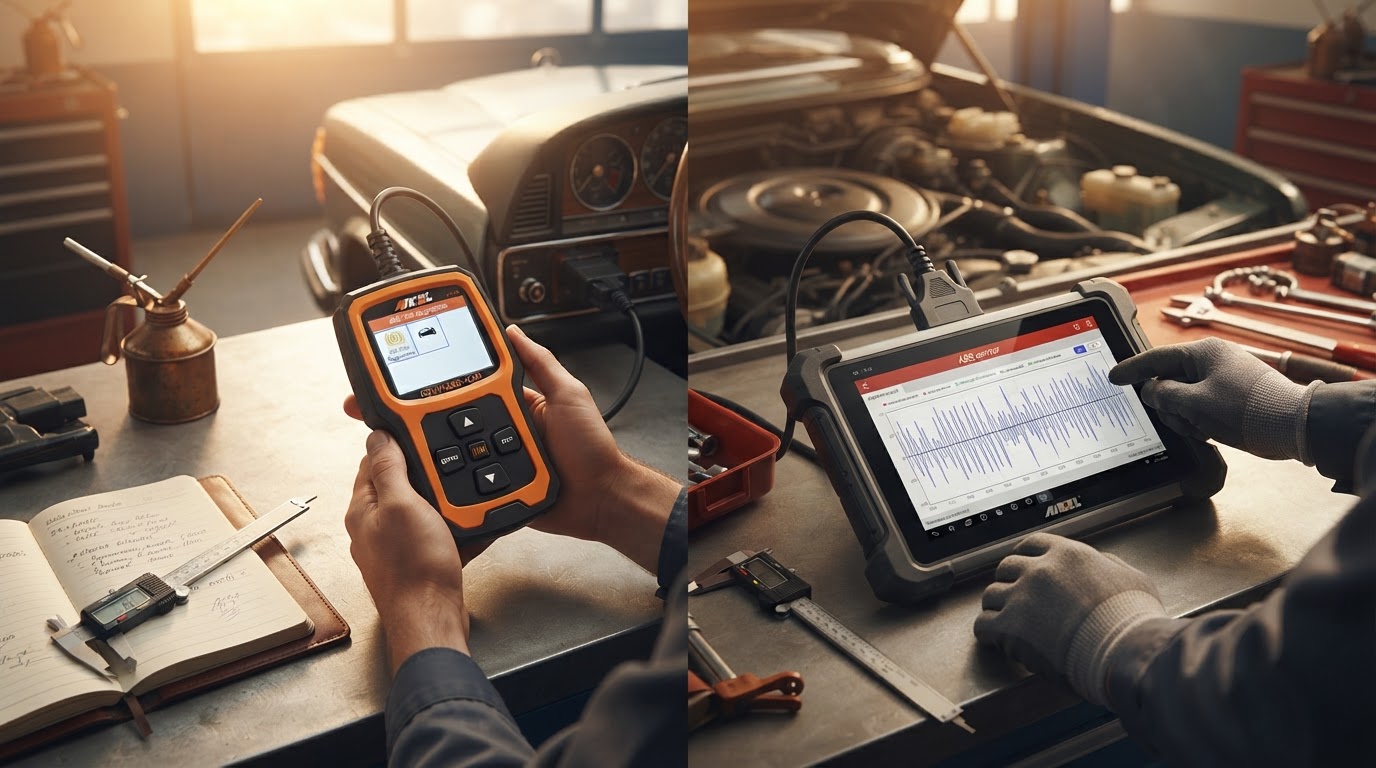
Using Car Engine Scanner for ABS and SRS Fault Detection
July 28, 2026. This analysis evaluates the technical requirements for diagnosing Anti-lock Braking System (ABS) and Supplemental Restraint System (SRS) faults using consumer-grade hardware. It is written for DIY mechanics who need to differentiate between generic powertrain codes and manufacturer-specific safety module data.
The Failure of Generic Diagnostic Protocols
The conventional wisdom says that any tool plugged into an OBD2 port can diagnose a modern vehicle. This is technically incorrect. While the California Air Resources Board (CARB) mandated standardized diagnostic protocols for emissions-related engine data in 1996, they did not extend those requirements to safety systems like ABS or SRS. Most entry-level tools only communicate with the Engine Control Module (ECM), leaving the brake and airbag modules as dark silos. When a technician uses a real time vehicle performance monitor obd2, they are often viewing data streams related to fuel trim or mass airflow, which provide zero visibility into why an ABS light is illuminated. Run the math: a standard OBD2 scan only accesses about 10% of the possible diagnostic trouble codes (DTCs) available on a modern vehicle's CAN bus. This data gap leads many DIYers to replace expensive sensors blindly, hoping to clear a dashboard light that the tool cannot even properly identify. According to the National Highway Traffic Safety Administration (NHTSA), braking and airbag systems are critical safety components that require specific communication protocols to ensure the integrity of the vehicle's safety net. Relying on a tool that lacks specific module access is not just inefficient; it is a fundamental misunderstanding of vehicle architecture.
How Car Engine Scanner Bridges the Data Gap
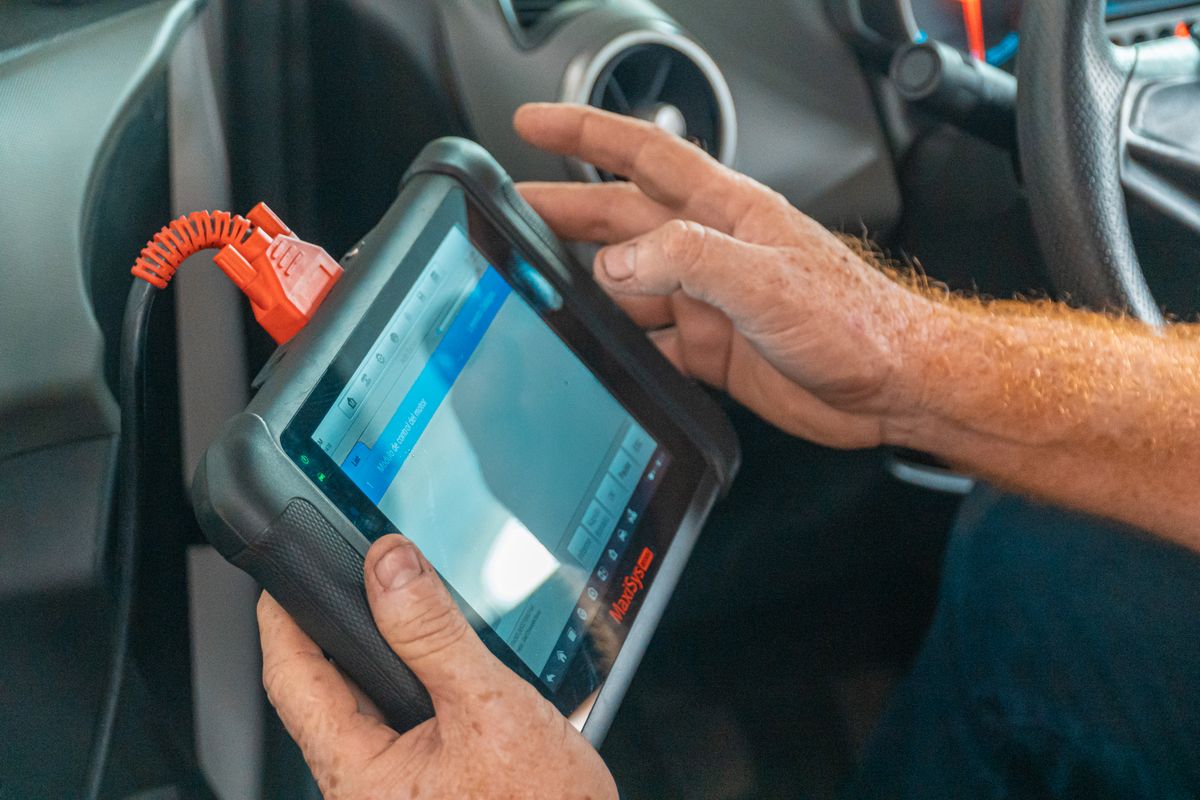
Photo by Jose Ricardo Barraza Morachis on Pexels
Car Engine Scanner addresses this technical deficit by utilizing extended PID (Parameter ID) sets that go beyond the basic P0-series codes. While most users start by simplifying vehicle diagnostics with Car Engine Scanner to handle check engine lights, the hardware is engineered to handshake with the specialized controllers governing the ABS and SRS. Here’s the part nobody talks about: reading a code is only half the battle. To effectively troubleshoot a wheel speed sensor or a clock spring failure, the tool must be able to clear the code after the mechanical repair is performed—a function many passive monitors lack. By integrating these functions into a single interface, the tool moves the user from a reactive stance to a proactive maintenance posture. This fits into a broader strategy of a car maintenance tracker via obd2, where safety system health is logged alongside routine fluid intervals. The hardware utilizes the ISO 15765-4 CAN protocol to ensure high-speed data transfer from the SRS module, allowing for a precise readout of crash data or deployment history that standard scanners simply ignore. This level of granularity is what separates a professional-grade obd2 scanner for cars from a generic code reader that only scratches the surface of the vehicle's internal network.
A Decision Framework for Safety System Diagnostics
Photo by Tim Samuel on Pexels
Before attempting to service ABS or SRS components, a DIY mechanic must verify that their hardware can actually communicate with the specific sub-networks of the vehicle. It is a mistake to assume that a tool capable of a real time vehicle performance monitor obd2 readout is equipped for safety module interrogation. Use the following checklist to determine if your diagnostic setup is sufficient for these tasks:
- Verify the tool supports manufacturer-specific DTCs (P1, B, C, and U codes) rather than just generic P0 codes.
- Confirm the hardware can perform a 'Clear' command on the SRS module; many tools are read-only for safety systems.
- Ensure the interface provides live data streaming for individual wheel speed sensors to isolate mechanical versus electrical ABS failures.
- Check for compatibility with the vehicle's specific CAN bus speed, as safety modules often operate on different priorities than the powertrain.
- Integrate the findings into a long-term car maintenance tracker via obd2 to monitor for recurring intermittent faults.