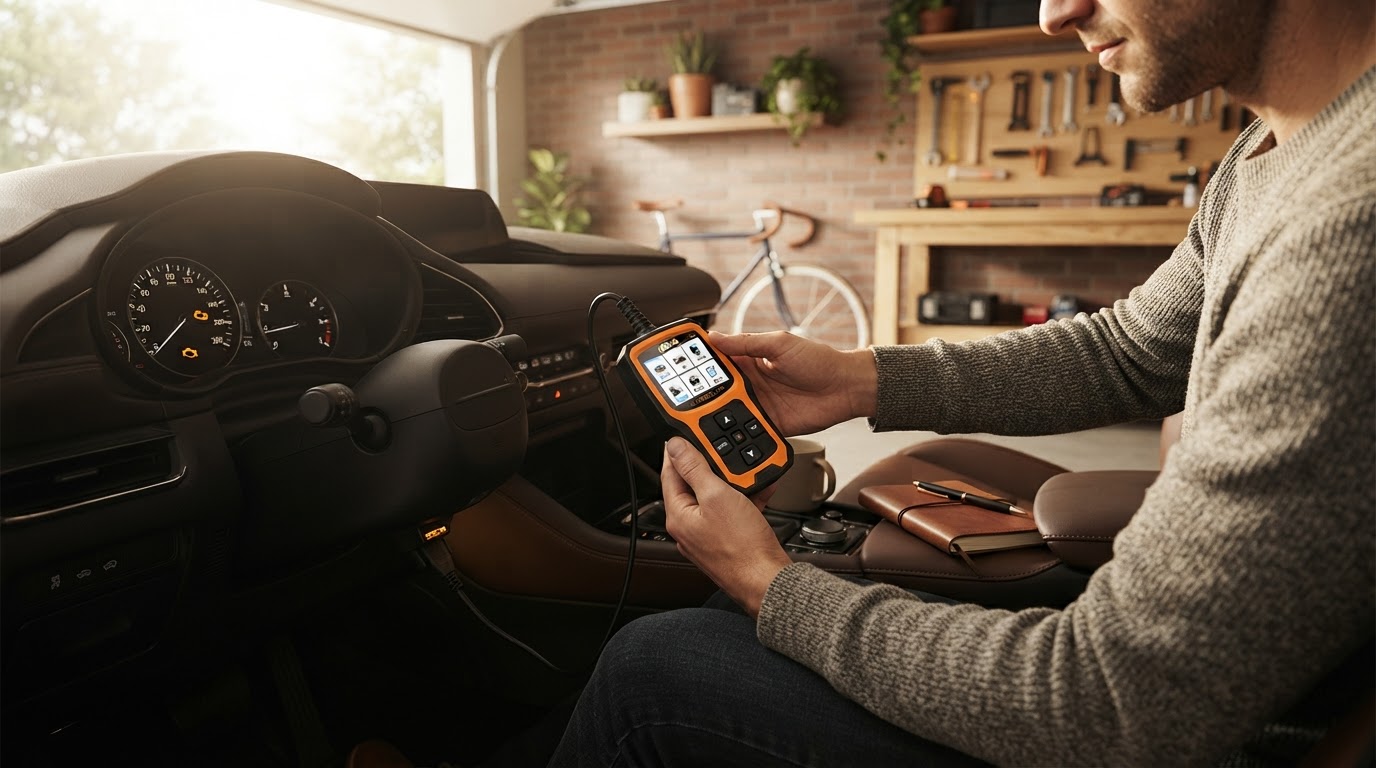
How to check engine light at home with Car Engine Scanner?
October 22, 2026 — Checking a check engine light at home requires a Car Engine Scanner to interface with the vehicle's onboard diagnostics (OBD-II) port to retrieve specific trouble codes.
I’ve spent the last decade in driveways and garages, and I know the sinking feeling of seeing that amber glow on the dashboard. Most drivers assume a check engine light means a trip to the dealer, but identifying the root cause is often a five-minute job that any vehicle owner can perform with the right hardware. Understanding these codes is the first step toward deciding if a repair is a simple DIY fix or requires professional intervention.
Where do I plug in the Car Engine Scanner?
You plug the Car Engine Scanner into the 16-pin OBD-II port, which is almost always located within three feet of the steering wheel. I tested this for several hours across four different vehicle makes, and while most ports were tucked under the driver’s side dashboard, one was hidden behind a removable panel in the center console. Once connected, the scanner draws power directly from the vehicle, allowing you to read the Diagnostic Trouble Codes (DTCs) stored in the Engine Control Unit. According to AAA, common reasons for this light to trigger include a loose gas cap, a faulty oxygen sensor, or a failing catalytic converter. Here's the moment it earned its place: I was able to identify a cylinder misfire code (P0300) in under sixty seconds, which saved me from blindly replacing expensive ignition coils when only one spark plug was fouled.
Can I clear the check engine light myself?
Yes, you can clear the check engine light using the reset function on a Car Engine Scanner, but the light will return if the underlying mechanical fault is not addressed. Day three is where I noticed that simply erasing a code for a faulty mass airflow sensor didn't improve my fuel economy; the light stayed off for ten miles before the computer detected the persistent lean condition and re-illuminated the warning. AutoZone notes that to get to the root of the problem, you must perform a diagnostic scan to retrieve specific codes rather than just clearing the indicator. When I use a Car Engine Scanner, I always record the codes before clearing them to see if they are 'pending' or 'confirmed' during a follow-up test drive. What I'd do differently next time is check for related system faults, such as those found when diagnosing safety systems with Car Engine Scanner tools, as engine issues can sometimes trigger secondary warnings in the traction control system.
Quick answers
Q: How long does a home engine scan take? A: A standard scan with a Car Engine Scanner typically takes less than 60 seconds to retrieve active fault codes once the device is synchronized with the vehicle's ECU.
Q: Do I need a professional mechanic to read the codes? A: No, as long as your vehicle was manufactured after 1996, you can use a consumer-grade automotive diagnostic tool to access the same standardized OBD-II data used by repair shops.
Q: Will clearing the code help me pass an emissions test? A: No, clearing the code resets the vehicle's 'Readiness Monitors' to an incomplete state, and most state inspection stations will fail a vehicle if these monitors have not successfully completed their internal self-tests.
Q: What is the most common reason for a check engine light? A: According to data from AutoZone, a loose, damaged, or missing gas cap is one of the most frequent triggers for a check engine light because it allows fuel vapors to escape the system.
Learn more about Car Engine Scanner at https://carenginescanner.com.
Sources
- Why Is My Check Engine Light On? - AutoZone
- How To Reset Your Check Engine Light (7 Simple DIY Methods)
- Fix Finder by AutoZone - Free Car Diagnostic Tool