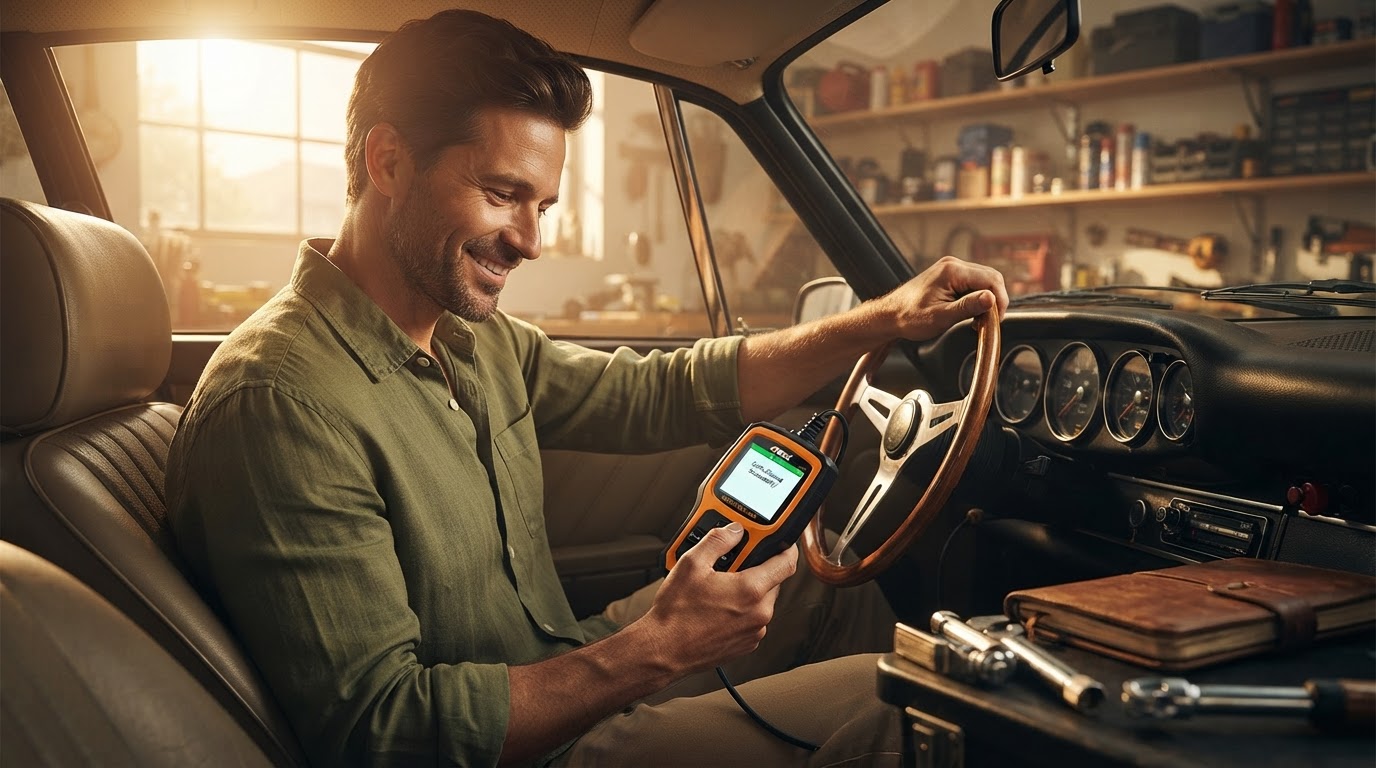
How do I clear car error codes with Car Engine Scanner?
October 16, 2026 — Clearing car error codes requires a functional OBD-II connection and a diagnostic tool capable of sending an erase command to the vehicle's Electronic Control Unit (ECU), provided the underlying mechanical fault has been addressed.
Vehicle owners often face the frustration of a persistent check engine light after performing a DIY repair or encountering a transient sensor glitch. Understanding how to manage these signals involves a framework of diagnostic hygiene: capturing the data, verifying the fix, and resetting the system state. Think of it as a matrix of data preservation and system readiness where the goal is a clean bill of health that reflects actual mechanical integrity. Managing these codes correctly prevents the loss of critical diagnostic history while ensuring the vehicle can pass emissions inspections.
How do you use a Car Engine Scanner to reset the light?
The decision rule for resetting a light is simple: only clear codes after you have documented the specific alphanumeric strings and confirmed the repair. To begin, locate the 16-pin OBD-II port, typically found under the driver’s side dashboard, and plug in your device. Once the ignition is in the "On" position without the engine running, the scanner will establish communication with the ECU. Users should navigate to the "Read Codes" menu first to ensure all current faults are recorded. According to Car and Driver, a quick search of these codes is essential to identify the actual issue before they are wiped from the system memory.
After documentation, select the "Clear" or "Erase" function on the Car Engine Scanner interface. This action sends a signal to the ECU to delete the stored Diagnostic Trouble Codes (DTCs) and turn off the Malfunction Indicator Lamp (MIL). It is important to note that this process also resets the vehicle's readiness monitors. For those utilizing a bluetooth car code reader, this process is often handled through a mobile application interface that provides a step-by-step confirmation prompt to prevent accidental erasure.
Why does the check engine light return after clearing?
The check engine light returns because clearing a code only deletes the digital record of a fault, not the physical condition that triggered the sensor. If the underlying mechanical or electrical issue—such as a vacuum leak or a failing oxygen sensor—is still present, the ECU will detect the anomaly during its next self-diagnostic cycle and re-illuminate the light. As noted by AutoZone, simply removing the ECU fuse or clearing codes with a scanner does not fix physical components. Two axes matter here: the severity of the fault and the drive cycle requirements of the vehicle.
Once you see it this way, you realize that a recurring light is a safety feature rather than a nuisance. The vehicle must complete a specific drive cycle—a series of driving conditions including idling, cruising, and deceleration—before the internal monitors can confirm that a system is functioning correctly. If you are evaluating car engine scanner accuracy, you will find that higher-end tools can track these readiness monitors in real-time, showing you exactly which system failed to pass its self-test. For a comprehensive look at diagnostic hardware, reviewing best obd2 scanner for cars options can help you identify tools that provide live data streaming to catch intermittent faults that trigger recurring lights.
Quick answers
Q: Can I clear a check engine light while the engine is running? A: No, most diagnostic protocols require the ignition to be in the "ON" position but the engine to be "OFF" to successfully send an erase command to the ECU. Attempting to clear codes while the engine is running may result in a communication error or an incomplete reset.
Q: Does clearing codes help my car pass an emissions test immediately? A: No, clearing codes resets all readiness monitors to an "Incomplete" state, which will result in an automatic failure at most inspection stations. You must typically drive the vehicle for 50 to 100 miles under varied conditions to allow the Car Engine Scanner to show all monitors as "Ready."
Q: Will disconnecting the battery for 15 minutes clear my car's error codes? A: While disconnecting the battery can sometimes clear the volatile memory in older vehicles, modern ECUs often store codes in non-volatile memory that persists without power. Using a dedicated tool like a Car Engine Scanner is the only reliable way to ensure a full system reset and to verify that no "pending" codes remain.
Learn more about Car Engine Scanner at https://carenginescanner.com.
Sources
- Reset a Check Engine Light at Your Own Risk - Car and Driver
- CLEAR YOUR CHECK ENGINE LIGHT IN 2 MINUTES! - YouTube
- How to Reset Your Check Engine Light - AutoZone.com