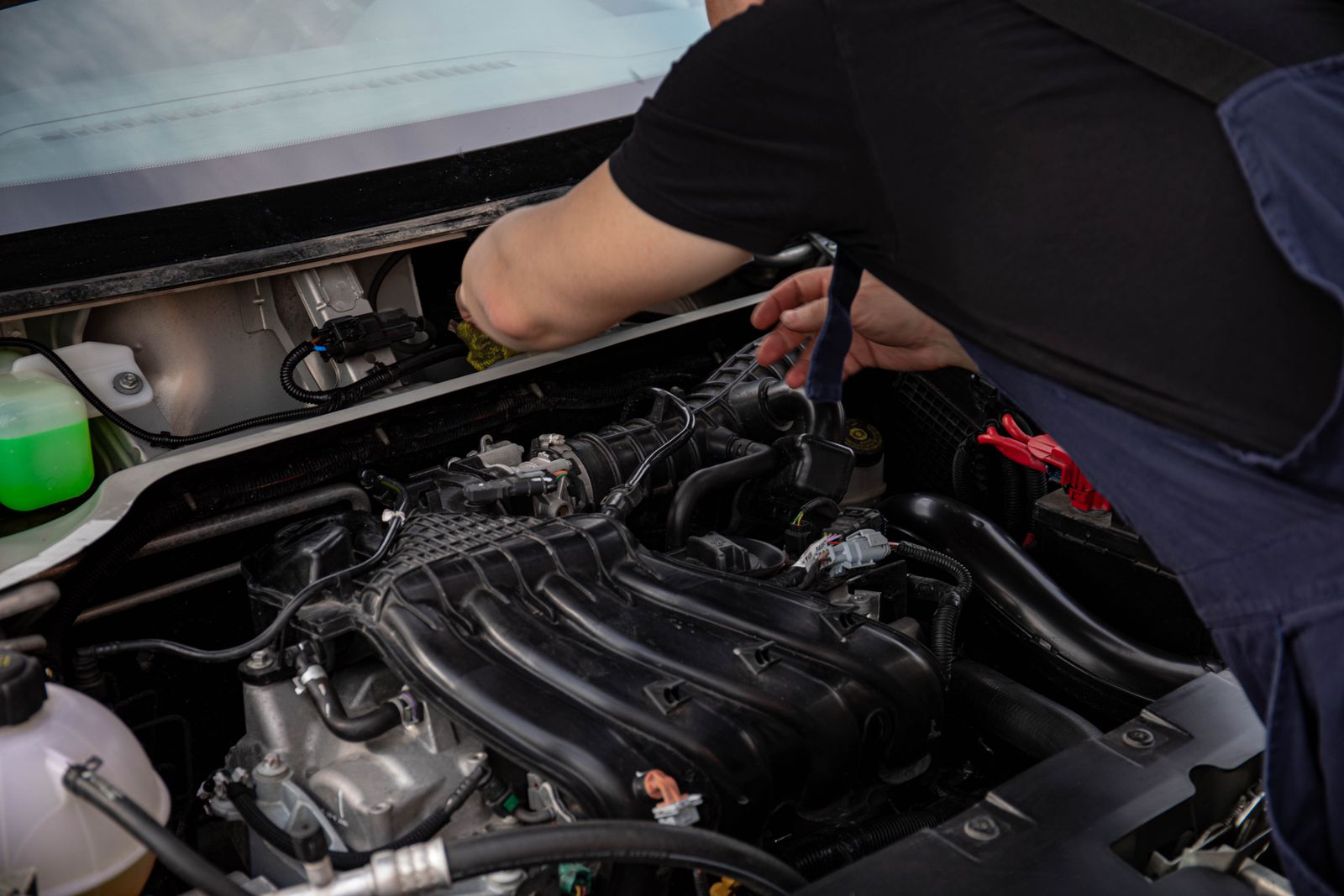
Top 5 Common Check Engine Light Codes and What They Mean for DIY Repairs
You are cruising down the highway when the yellow engine icon lights up on your dashboard. The 5 most common check engine light diagnostic trouble codes (DTCs) are P0300 (random misfire), P0420 (catalytic converter efficiency), P0171 (system lean), P0455 (large EVAP leak), and P0135 (O2 sensor heater circuit). Using an enhanced OBD2 scan tool like the ANCEL AD410 lets you instantly read stored codes, analyze Freeze Frame parameters, and conduct EVAP system leak tests to repair issues like gas cap leaks or sensor failures without overpaying at a repair shop.
DIY Fixability vs. Professional Mechanic Repair Thresholds
Determining whether to resolve an engine diagnostic trouble code in your driveway or head to a commercial repair shop depends on driveability risk, diagnostic complexity, and tool requirements.
Best choice for
- DIY Repair with ANCEL AD410 Scanner — Requires zero component disassembly. Tightening or replacing the gas cap and running an EVAP system leak test with the ANCEL AD410 verifies the fix safely in minutes.
- DIY Sensor Replacement with Basic Hand Tools — Upstream O2 sensors on most US domestic and import vehicles are readily accessible on the exhaust manifold and plug directly into the wiring harness.
- Dashboard check engine light is actively FLASHING while driving, indicating a severe active cylinder misfire (P0300) dumping raw fuel into the exhaust stream.
- Vehicle exhibits engine knocking, overheating, severe hesitation, or sudden oil pressure loss.
- Professional Master Technician Repair — Recommended for persistent P0420 codes where exhaust backpressure testing, smoke testing, or oscilloscope signal analysis is required to rule out engine timing or fuel delivery issues.
Top 5 Check Engine Light Codes Severity & Diagnostic Matrix
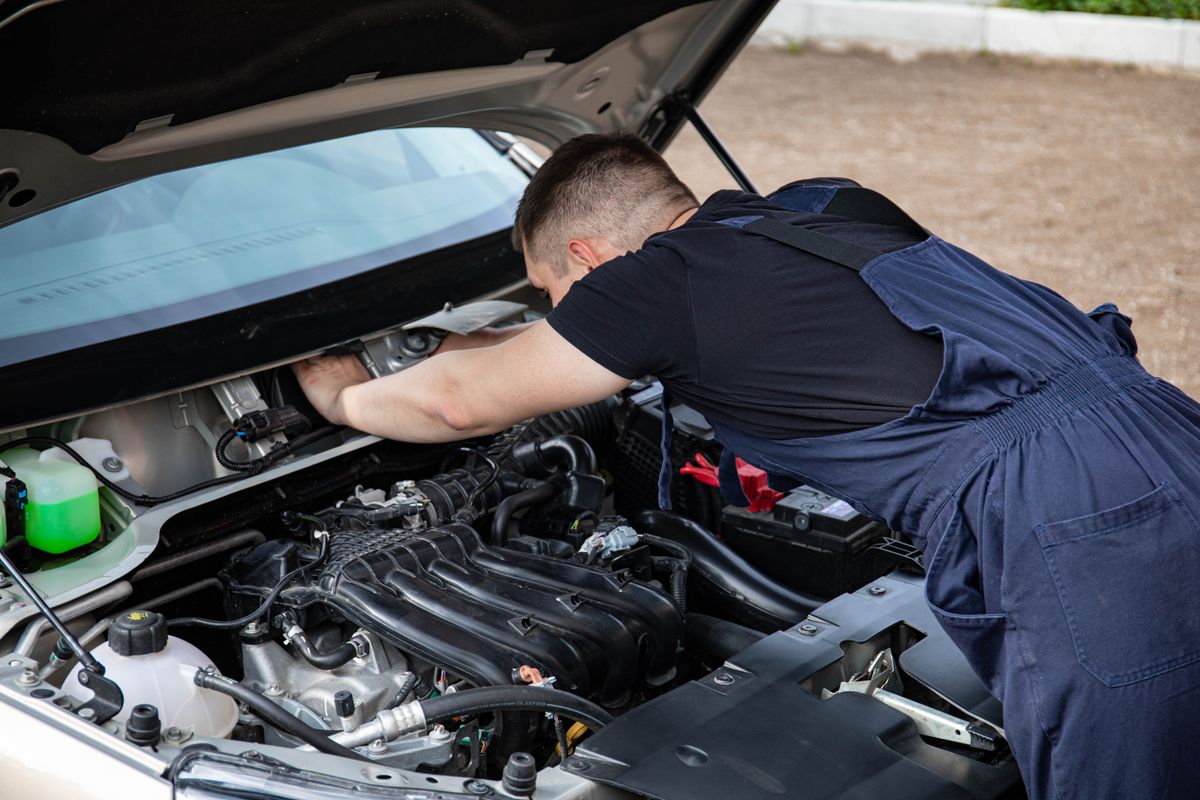
Photo by Sergey Meshkov on Pexels
| DTC Code | System / Definition | Severity Level | Driving Risk | Typical DIY Cost | Scan Tool Diagnostic Mode |
| --- | --- | --- | --- | --- | --- |
| P0300 | Ignition: Random / Multiple Cylinder Misfire Detected | High (Flashing = Critical) | Immediate catalytic converter destruction if light is flashing | $25 - $150 (Plugs / Coils) | Live Data Misfire Counters & Fuel Trim Stream |
| P0420 | Emissions: Catalyst System Efficiency Below Threshold (Bank 1) | Moderate (Solid Light) | Safe for short trips; reduced fuel economy; fails smog inspection | $200 - $1,200 (Cat / Sensors) | O2 Sensor Live Voltage Graphing & Freeze Frame |
| P0171 | Fuel / Air: System Too Lean (Bank 1 Air-Fuel Ratio) | Moderate to High | Engine hesitation, lean detonation, risk of valve damage over time | $15 - $80 (Hose / MAF Cleaner) | Short-Term & Long-Term Fuel Trim (STFT / LTFT) |
| P0455 | EVAP: Evaporative Emission Control System Gross Leak | Low (Solid Light) | Safe to drive; unburned fuel vapors escaping into atmosphere | $15 - $75 (Cap / Purge Valve) | EVAP System Leak Test / Fuel Integrity Monitor |
| P0135 | Exhaust: O2 Sensor Heater Circuit Malfunction (Bank 1 Sensor 1) | Low to Moderate | Poor cold-start emissions, delayed closed-loop operation | $40 - $110 (Upstream O2 Sensor) | O2 Sensor Heater Status & Resistance Verification |
Pre-Diagnostic Checklist: What to Do Before Replacing Parts
Before purchasing replacement oxygen sensors, ignition coils, or catalytic converters, execute this systematic diagnostic checklist to avoid firing the 'parts cannon':
- Inspect Light Behavior: Note whether the check engine light is solid yellow or actively flashing.
- Locate DLC Port: Connect your OBD2 scanner into the 16-pin Data Link Connector (DLC) located underneath the driver's side dashboard.
- Establish Ignition State: Turn the ignition key to the ON position with the engine OFF (KOEO) before linking the scan tool.
- Pull Active & Pending DTCs: Record primary trouble codes along with any secondary pending codes stored in the ECU.
- Capture Freeze Frame Data: Write down engine RPM, coolant temperature, vehicle speed, and short/long-term fuel trim values logged at the exact moment the fault occurred.
- Perform Visual Inspection: Check engine bay vacuum lines, intake manifold boots, wiring harnesses, and the fuel filler cap rubber gasket for visible cracking or loose fittings.
- Monitor Live Data: Utilize the scan tool's live PID stream to verify sensor readings before and after executing hardware fixes.
DIY Diagnostic Flowchart: Dashboard Light to Confirmed Repair
- Is the Check Engine Light flashing rapidly while the engine is running? → Yes: PULL OVER SAFELY & SWITCH OFF ENGINE. Active misfire (P0300) will ruin the catalytic converter within minutes. Check spark plugs and ignition coils immediately.. No: Connect OBD2 scan tool to the 16-pin DLC port with ignition key ON and engine OFF.
- Does the scanner display EVAP leak code P0455 or P0440? → Yes: Inspect gas cap rubber seal for cracks or debris. Tighten gas cap until it clicks, or replace cap. Use ANCEL AD410 EVAP Leak Test to monitor tank integrity.. No: Review Freeze Frame data and navigate to Live Data Stream.
- Are combined fuel trims (STFT + LTFT) higher than +15% at idle (P0171 Lean Code)? → Yes: Inspect air intake hose for tears and vacuum lines for leaks. Clean Mass Air Flow (MAF) sensor with approved contact cleaner.. No: Analyze O2 sensor heater circuits (P0135) or monitor downstream O2 sensor voltage stability (P0420).
Troubleshooting Deep Dive: Top 5 DTC Symptoms and Fixes
| DTC | Primary Symptoms | Root Causes | OBD2 Scanner Verification Method | Recommended DIY Repair |
| --- | --- | --- | --- | --- |
| P0300 | Engine shaking, rough idle, severe hesitation, flashing check engine light | Fouled spark plugs, failed ignition coil pack, vacuum leak, low fuel pressure | Check Live Data misfire counters for specific cylinders; inspect Freeze Frame engine load | Replace worn spark plugs and faulty ignition coils; inspect fuel injector harness connectors |
| P0420 | None or slightly reduced gas mileage; sulfur smell from exhaust | Degraded catalytic converter core, failing downstream O2 sensor, upstream exhaust leak | Graph Bank 1 Sensor 2 O2 voltage; a healthy downstream sensor holds a steady ~0.45V line at warm idle | Repair exhaust manifold leaks first; replace downstream O2 sensor; replace catalytic converter assembly if wave oscillates rapidly |
| P0171 | Hesitation on acceleration, lean engine knock, elevated idle RPM | Dirty MAF sensor wire, cracked rubber air intake boot, dry-rotted vacuum lines, weak fuel pump | Observe STFT and LTFT live data; if positive trims drop from +20% to near 0% at 2,500 RPM, suspect a vacuum leak | Clean MAF sensor with dedicated spray; replace damaged air intake boots or cracked vacuum tubing |
| P0455 | Gasoline vapor smell near rear fuel tank filler neck | Loose or missing gas cap, split EVAP purge valve hose, stuck open EVAP canister purge solenoid | Initiate EVAP Leak Test on ANCEL AD410 scanner; monitor fuel tank pressure sensor response | Tighten gas cap or replace missing cap ($15); replace faulty under-hood EVAP purge solenoid ($35) |
| P0135 | Rough cold idle, extended engine warmup time, high cold-start fuel consumption | Blown O2 sensor heater fuse, melted wiring harness touching exhaust, burnt internal heater element | Read Live Data O2 heater status; measure heater circuit terminal resistance with a digital multimeter (typically 5-15 ohms) | Inspect engine bay fuse box; fix burned harness wires; replace Bank 1 Sensor 1 upstream oxygen sensor |
Recommended Diagnostic Tool for DIY Mechanics
Stop guessing what your check engine light means. The ANCEL AD410 Enhanced OBD II Vehicle Code Reader is the essential diagnostic scan tool for every home garage. Unlike basic entry-level code readers that only print out cryptic numerical codes, the AD410 provides enhanced OBD2 diagnostics—including real-time live engine data graphing, freeze frame snapshot capture, and dedicated EVAP system leak testing to verify fuel tank integrity.
Take control of your vehicle's maintenance and eliminate $100+ diagnostic fees at the mechanic. Buy the ANCEL AD410 Code Reader today to troubleshoot engine trouble codes with confidence.
Featured Scan Tool: ANCEL AD410 Enhanced OBD2 Reader
The ANCEL AD410 (Model AD410) is purpose-built for vehicle owners and DIY mechanics who demand reliable engine diagnostics without complicated professional setup. Featuring a rugged black and yellow casing and a vibrant 2.4-inch TFT color screen, it plugs directly into any 1996 or newer US-based vehicle.
Key Features for DIY Troubleshooting:
- EVAP System Integrity Test: Initiates leak tests of the vehicle's EVAP system by monitoring fuel tank pressure levels to confirm P0455 repairs.
- Enhanced Live Data Graphing: Views real-time parameters such as engine RPM, coolant temperature, O2 sensor voltage waveforms, and short/long-term fuel trims.
- Freeze Frame Diagnostics: Displays exact engine operational parameters (load, speed, fuel pressure) recorded at the exact moment a code set.
- I/M Readiness Hotkeys: Displays smog test readiness status with a single button press to ensure you pass state emissions testing.
Key Takeaways for Managing OBD2 Codes
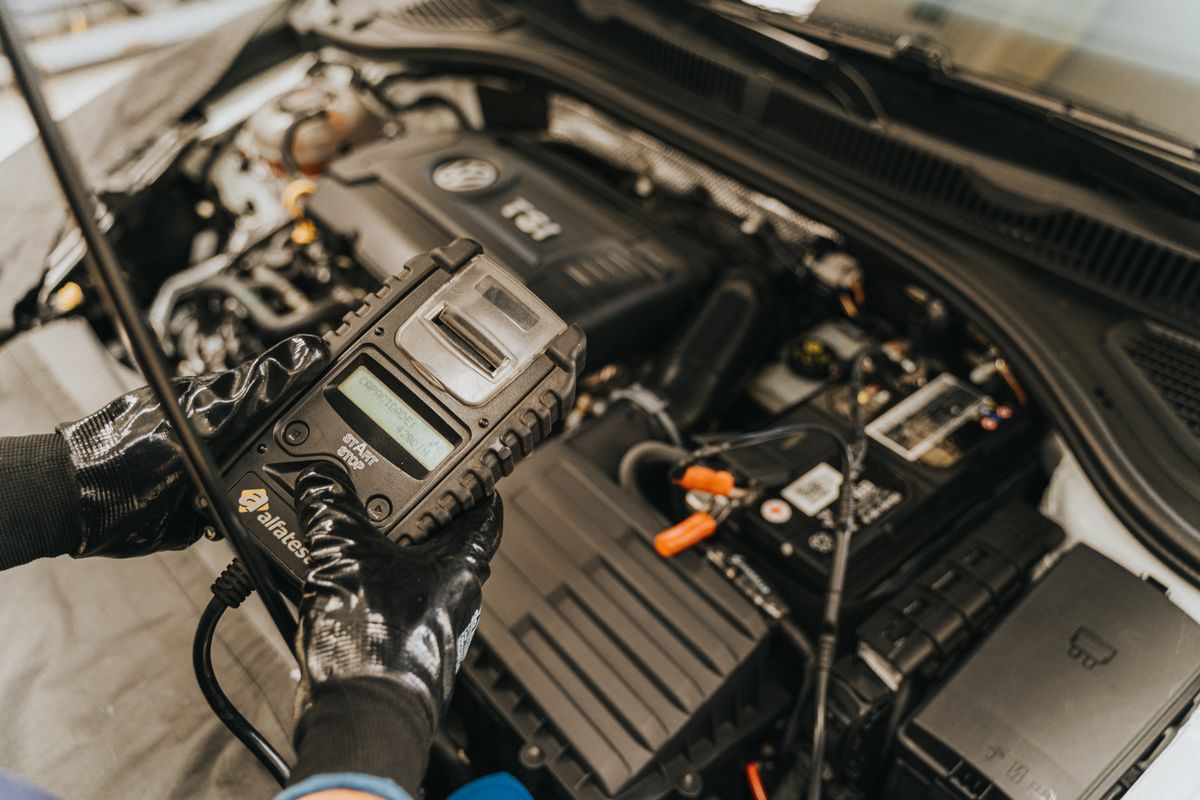
Photo by Daniel Andraski on Pexels
- A flashing check engine light indicates a severe active misfire (P0300) requiring immediate vehicle shutdown to avoid melting the catalytic converter core.
- Upward of 40% of evaporative emission codes (P0455) are caused by a loose, damaged, or unseated gas cap seal.
- Always record Freeze Frame data before clearing diagnostic codes to maintain vital engine diagnostic context.
- Clearing engine codes with a scan tool resets all I/M readiness monitors to 'Not Ready,' which results in an immediate failure at state smog inspection stations.
- An enhanced OBD2 scanner like the ANCEL AD410 pays for itself on its very first use by eliminating dealer diagnostic fee charges.
OBD2 Tool Compatibility & Feature Specification Matrix
| Diagnostic Feature | Basic Code Reader ($20) | ANCEL AD410 Enhanced ($45-50) | Professional Shop Scanner ($500+) |
| --- | --- | --- | --- |
| Read & Clear Engine Trouble Codes | Generic Codes Only | Generic & Manufacturer-Specific | Full System (ABS/SRS/Body/Transmission) |
| Freeze Frame Data Capture | No or Limited | Yes (Full Parameter List Display) | Yes (Multi-Frame Capture) |
| Live Data Stream & Graphing | No (Text Text Only) | Yes (Multi-Parameter Color Graphing) | Yes (Bi-Directional Graphing) |
| EVAP System Leak Monitoring | No | Yes (Fuel Tank Integrity Test Mode) | Yes (Bi-Directional Solenoid Control) |
| I/M Readiness Smog Check | Basic LED Indicators | One-Click Hotkey Status Overview | Full Emissions Diagnostic Suite |
| Screen Display & Interface | Monochrome LCD | 2.4-inch QVGA Color Display | 7+ inch Touchscreen Tablet |
Common DIY OBD2 Diagnostic Mistakes to Avoid
Avoid these costly diagnostic mistakes when working on check engine light issues in your driveway:
Frequently Asked Questions About Check Engine Light Codes
Related Automotive Diagnostic Guides
- Top Common Reasons Your Check Engine Light Turns On
- Top Common Reasons Your Check Engine Light Is On
- Why Is My Check Engine Light On? Causes, Diagnostics, and Solutions
Next Steps to Resolve Your Check Engine Light
Your decision: Identify your vehicle's specific diagnostic trouble code with an OBD2 scanner before ordering replacement auto parts.
Do this next: Plug the ANCEL AD410 into your vehicle's DLC port under the steering wheel, retrieve active trouble codes and Freeze Frame snapshot data, and execute an EVAP system leak test if troubleshooting emissions codes.
Related resource: Basic vs Enhanced OBD2 Scanners: What DIY Mechanics Actually Need
ANCEL AD410 Enhanced OBD II Vehicle Code Reader
Cover photo by Sergey Meshkov on Pexels.