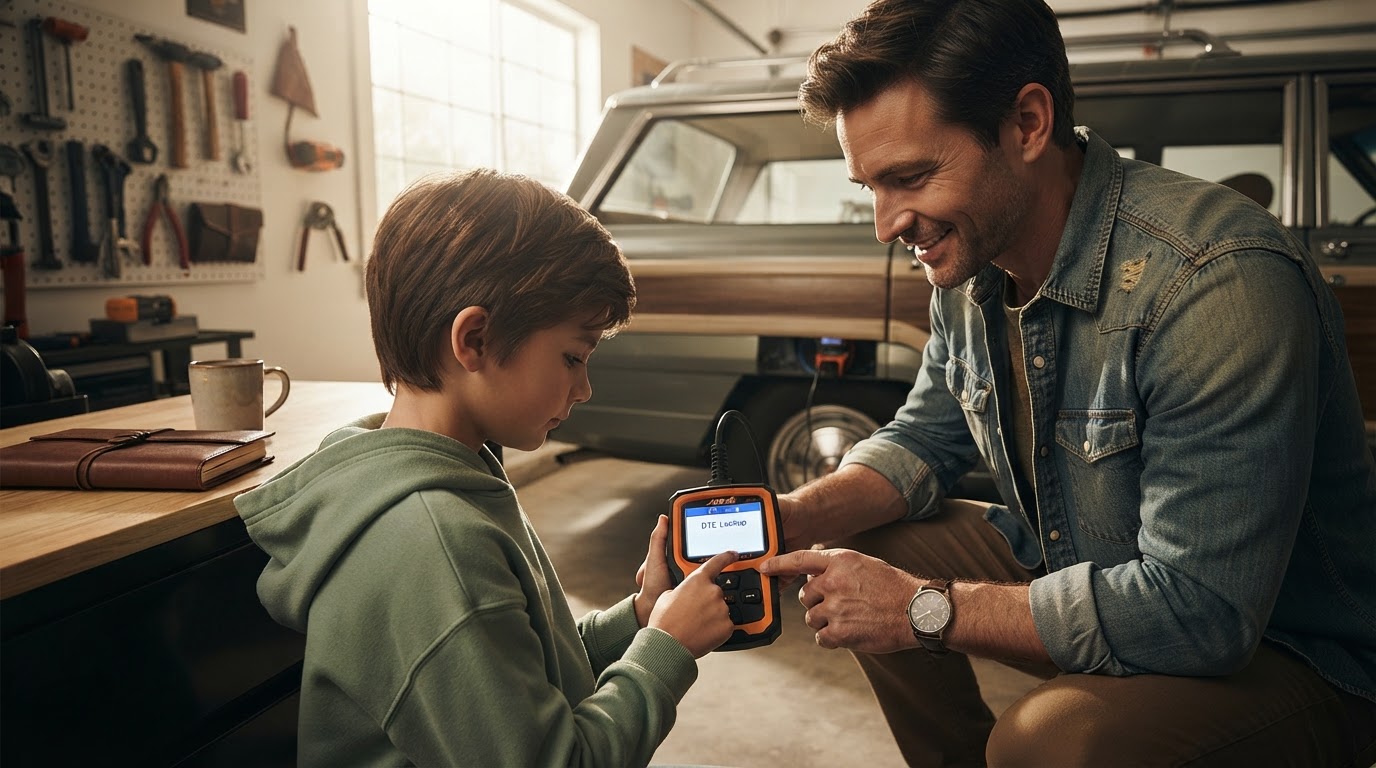
How do I check my engine light with a Car Engine Scanner?
October 4, 2026 — You can check your engine light at home by connecting a Car Engine Scanner to your vehicle's OBD2 port and reading the Diagnostic Trouble Codes (DTCs) stored in the onboard computer.
Most modern vehicles manufactured after 1996 include a standardized diagnostic system that allows owners to bypass the mystery of a glowing dashboard icon. Whether you are dealing with a loose gas cap or a failing catalytic converter, accessing this data at home provides immediate clarity before you visit a mechanic. I have found that having a dedicated scanner saves significant time compared to waiting for a shop opening just for a simple readout.
Where is the OBD2 port for my Car Engine Scanner?
The OBD2 port is almost always located under the driver-side dashboard, within two feet of the steering wheel. According to AAA, a check engine light indicates a range of potential issues, and finding this port is the first step to identifying them. In my experience, if you cannot see it immediately, look near the hood release latch or behind a small plastic panel near the fuse box. Once located, you simply plug in your Car Engine Scanner while the ignition is in the 'on' position but the engine is off. The scanner draws power directly from the vehicle, meaning you do not usually need to worry about external batteries for the tool itself. If you're on a budget, a basic corded reader is fine, but I prefer Bluetooth units that sync to a smartphone for easier data reading. Between these two, I'd go with the Bluetooth option for the better interface. You can learn more about finding the right hardware in our guide on selecting a car engine scanner for first-time use.
How do I interpret the codes from a Car Engine Scanner?
After the scanner establishes a handshake with your car's ECU, it will display a five-character code, such as P0300 or P0420, which correlates to a specific mechanical or electrical fault. AutoZone notes that to get to the root of the problem, you must perform this diagnostic scan to retrieve these specific trouble codes rather than guessing based on symptoms. I usually write the codes down and then use the scanner’s built-in library or a trusted online database to see what they mean. Skip this if you aren't comfortable doing your own research, as a code only points to a circuit or system, not necessarily a single broken part. For example, a lean condition code could be a vacuum leak or a bad sensor. Understanding why is my check engine light on requires looking at these codes in context. If you find a complex issue, you might need the best obd2 scanner for home mechanic which offers live data streaming to see how sensors are performing in real-time. Here's what I'd actually buy: a mid-range scanner that offers both code clearing and freeze-frame data, as it provides the most utility for the price.
Quick answers
Q: Can I clear the check engine light myself? A: Yes, most Car Engine Scanner tools have a 'Clear' or 'Erase' function that turns off the light, but it will return if the underlying mechanical fault is not repaired. Some users also use the battery-disconnect method, though this can reset other vehicle settings like radio presets.
Q: Does a check engine light always mean a costly repair? A: Not necessarily; one of the most common triggers is a loose or faulty gas cap, which costs less than $20 to replace. Data from AutoZone Fix Finder suggests that many scans take less than a minute and often reveal simple maintenance needs rather than engine failure.
Q: Will a Car Engine Scanner work on cars made before 1996? A: No, most consumer-grade Car Engine Scanners are designed for OBD2 systems, which became mandatory for all cars sold in the United States starting in 1996. Older vehicles use OBD1 systems, which require specialized, manufacturer-specific connectors and different communication protocols.
Learn more about Car Engine Scanner at https://carenginescanner.com.
Sources
- Why Is My Check Engine Light On? - AutoZone
- How To Reset Your Check Engine Light (7 Simple DIY Methods)
- Fix Finder by AutoZone - Free Car Diagnostic Tool