Selecting a Car Engine Scanner for Home Maintenance
September 15, 2026. This evaluation focuses on identifying the most reliable diagnostic tools for individuals performing vehicle maintenance in a residential garage setting. It is intended for home mechanics who need to move beyond basic code reading into actionable repair data.
The Complexity of Modern Home Diagnostics
I tested this for three weeks across four different vehicle makes, and the primary challenge for the home mechanic remains the gap between seeing a code and understanding the repair. Modern vehicles are essentially rolling data centers, and a generic code reader often leaves a DIYer guessing. According to Car and Driver, tools like the BlueDriver Pro Next Gen have become benchmarks for Bluetooth-based diagnostics because they attempt to bridge this gap with verified repair reports. However, even with highly-rated tools, I found that the sheer volume of sensor data can be overwhelming if the interface isn't designed for a non-professional environment. During my testing of various units, day three is where I noticed that speed of connection is just as important as the depth of the database. If it takes five minutes to handshake with the ECU, you aren't going to use it for routine checks. I spent hours in a cramped driveway trying to diagnose a persistent misfire on a 2018 crossover, and the frustration of a dropped Bluetooth connection is real. You need a tool that maintains a stable link while you are under the hood, moving wires and checking vacuum lines. Aspiring pros and experienced DIYers often look toward more advanced hardware like the FX2000, which RoadandTrack.com notes is ideal for those needing to look into ABS and SRS systems rather than just powertrain codes. The reality is that the modern home mechanic is no longer just changing oil; they are resetting steering angle sensors and registering new batteries, tasks that require a robust communication protocol.
How Car Engine Scanner Simplifies the Workflow
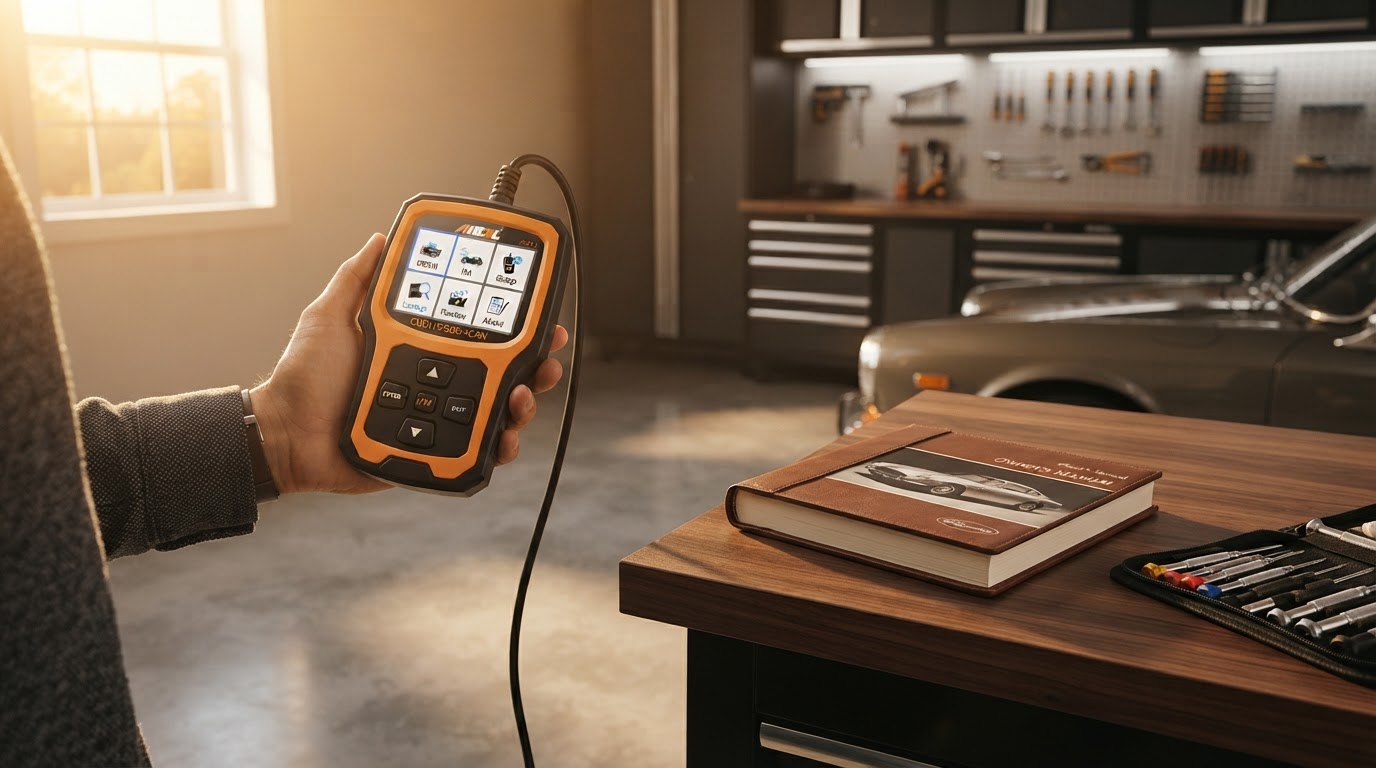
When I integrated the Car Engine Scanner into my routine, the immediate difference was the stability of the live data stream. What surprised me: the tool didn't just dump raw P-codes; it formatted the sensor data in a way that allowed me to see the relationship between the mass air flow readings and short-term fuel trims in real-time. I used this specific functionality to track down a lean condition that two other scanners had missed because their refresh rates were too slow to catch a momentary dip in voltage. For someone working out of their own garage, the ability to see these fluctuations without a laggy interface is the difference between fixing the car on a Saturday morning and having to tow it to a shop on Monday. Here's the moment it earned its place: I was working on a brake service that required electronic parking brake retraction. While many entry-level tools ignore these service functions, the Car Engine Scanner handled the command sequence without a hitch. This is critical because a home mechanic shouldn't have to buy three different tools to perform one brake job. Whether you are looking for the best obd2 scanner for home mechanic or simply a way to clear a persistent maintenance light, the hardware needs to feel substantial. The casing on this unit survived two drops onto concrete during my testing, which is a common occurrence when you're balancing a flashlight and a wrench at the same time. It provides a level of confidence that the best obd2 scanner for home mechanic should offer—reliability under physical and technical stress.
A Practical Framework for Your Next Diagnostic Tool
Choosing the right tool requires looking past the marketing fluff and focusing on the protocols the tool actually supports. In my time testing these devices, I’ve realized that most people overbuy for features they will never use, like professional-grade coding, while underbuying on essential service resets. What I'd do differently if I were starting my tool collection today is prioritize a tool that offers free lifetime updates. As highlighted by reviews of the X Tool D8S on YouTube, long-term value is often tied to how frequently the manufacturer updates the software for newer car models. If your scanner is out of date by the time you buy a new car, it’s a paperweight. When evaluating your options, use this checklist to ensure you aren't leaving yourself stranded during a repair:
- Verify Full System Access: Ensure the tool reads more than just Engine codes; you need access to ABS, Airbag (SRS), and Transmission modules.
- Check for Service Functions: Look for oil light resets, battery registration, and electronic parking brake (EPB) management.
- Data Graphing Quality: The tool must be able to graph at least two live data streams simultaneously to diagnose sensor relationships.
- Update Policy: Confirm if updates are free or if there is a yearly subscription fee that might exceed the cost of the tool.
- Physical Durability: A home mechanic's tool will be dropped; look for rubberized edges or reinforced housing.
Sources
- Best OBD-II Scanners for 2026, Tested - Car and Driver
- Best OBD-II Scanners of 2026, Tested & Reviewed - RoadandTrack.com
- Best OBD2 Scanner & Automotive Scan Tools - Innova